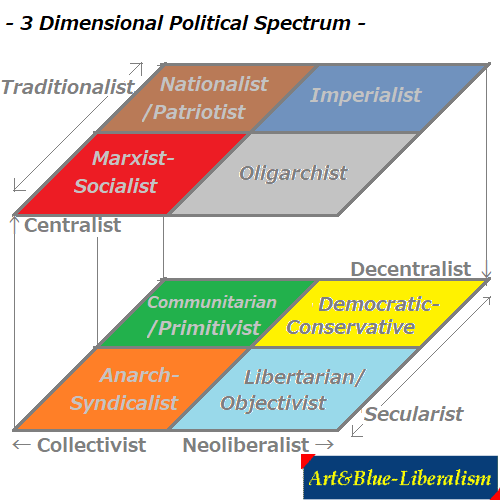
1. The rise of the new form of totalitarianism
In the past, reducing the power of nation states' government would lead to liberating individuals from the oppression, and encouraging the growth of capitalism was believed to be correlated with freeing individuals. By contrast, when the national borders became less significant for both capital movement and securing political interests after the Cold War, the power of big multinational corporations has become stronger and more influencing individuals' life than nation states' government.
Furthermore, as the power of these multinational corporations have become stronger and influential as such, nation-states' government have become obedient to the interests of these big multinational corporations in exchange for their immense productivity and their capacity of employing their national population. There is a symbolic quote "Being expelled from using an Apple product and service is more painful than being expelled from a national citizenship nowadays."
Many claim that our current world is dominated by utilitarianism. However, the current world of corporatist capitalism does not fulfil the fundamental principle of utilitarianism the greatest sum of pleasure and the lowest sum of pains. The majority are tricked to falsely believe these totalitarian corporatists are maximising the utility. The consequence of what they plot to maximise is the utility of the minority corporatists' utility. Then, this project attempts to indicate how the corporatism (Corporatistic capitalism) diverges from the happiness of majority individuals.
2. How Corporatism seizes the power of the gigantic corporations and suppresses both free market competition and individual liberty.
We have believed that the road to serfdom was evaded since the end of the cold war with a victory of capitalism over the socialist-empire, the excess form of socialism which was considered as the serfdom. Nevertheless, we are still in danger of being unintentionally guided to a serfdom. The modern industrial world has increased the material productivity and the political stability under the common interest in pursuing a material prosperity. At the same time, this has also produced the cost for individuals to live in an intensively cohesive structure.
These individuals and their corporations are actually not free to act and compete because some of them are privileged more than the others. The nation state's government and judicature set their roles suitable for their peer groups which are loyal to the authority or their nation-state. So, their freedom of action is still restricted by the roles and their competition is based on the authoritarian interests of a nation-state's autocracy and its fellow peer corporate elites.
This structure is a resemblance to the oligarchy dominated by the combination of monarchy and this monarchy's peer oligarchs explained in Fragment on Government. Even though their authority is merely a constitutional, the status-quo having been maintained so long time has already established the unbreakable hierarchy of power and wealth. These autocratic peers have already monopolised their power and wealth as much as they are able to prevent their potential competitors away from gaining more power than the already existing status-quo even under a free market competition.
Both capitalism and socialism frequently put emphasis on excess-conformity and staunchly regulate individuals and their freedom of action, life, and thought by condemning egoism as vice. Socialism forcibly integrates individuals into its autocratic cohesion meanwhile capitalism simply spontaneously excludes individuals, who are disloyal and/or useless for their interests, from the means of acquiring material well-being and status honour. Both are the homogenous political ideologies discriminating and ostracising who are too unique and eccentric.
Whenever individuals are employed by a corporation to spend their time and efforts for it, they must have realised that many of corporations do not base their business management on the rational market mechanism. The management of these corporations is influenced by the irrational preferences of both the high class members, the minority but powerful executive committees, and the peer-groups of the majority employees. The executives often tend to put priority on their personal favour and their biased view on unique individuals over individuals' competence and merit. The majority workers form their peer group to purge the other individuals hardly integrated into their peer group due to their jealousy and discrimination.
Because of this employment scheme biased by these irrational causes, the market equilibrium of demand and supply of the human-capital is hardly accomplish-able, and the mobility of human capital is far more rigid than the market structure explained by the free market principle, the classical economic theory of capitalism. There is then the political influence on the corporate structure. The modern corporate structure is unnecessarily big and complexly stratified as same as the bureaucracy of a nation state, and this does not look like how the private sector structural model is supposed to be by the free market principle.
The existence and the prosperity of these corporations are secured by the law enforcement and regulations designed and imposed by the single nation-state's authority, and these corporations aid the nation state authority by doing its favour. Unlike a pure form of socialism, how both various private corporations are incorporated into one unified nation-state bureaucracy. But, this capitalist structure is identical to the state-socialist counterpart seen in the USSR. Lenin had actually embraced the growth of state capitalism in The State and Revolution as the modern capitalism becomes more bureaucratic and incorporate into the nation-state's bureaucracy.
3. Economic growth = Inevitable Centralisation

Adam Smith, the father of economics, thought highly of the division of labour. When one smith can manufacture 100 pins a day, 10 smiths with the same skill can join together to produce more than 10,000 pins when the labour is divided to each smith. The scale of this institutional integration of labour force to produce a particular product is called the economic scale. The economic scale expands when the higher production capacity becomes more available and demanded.
Smith put emphasis on the market competition which should be encouraged to increase the motivation of individuals and their firms to produce more efficiently and effectively. These individuals are motivated by a higher reward i.e. their higher profit than others when they can produce better than the others. He also claimed for not only the competition of production but also the competition of ideas among individuals. Then, free open trades in a wider area provide them with more opportunity to compete and gain more productive ideas.
David Ricardo claimed for the specialisation of industries in a wider scale than Adam Smith. He argued that each different country should be specialised in producing what they are good at producing so that the aggregate productivity. In an international trade, the productivity can be maximised due to the division of labour available to be concentrated on producing higher quantity. This idea has provided an opportunity for countries with a relatively lower aggregate productivity to join the international trade.
The size of private sector industries has swelled by taking an advantage of the trade route expansion and the division of labour applied to their production methods as a new management tool. Firms have enlarged their production and management scale, and their business have branched out over the nation-wide and even the world. Then, they have started employing more labourers and their management structure has become more complex and structured. Then, their organisational structure has become more centralised under an authority of one opinion lead with a technocratically selected elites, called the executives, in order to maintain the decision making process consistent and efficient. The executives are usually selected by their merit and responsibility for their company management so that it is a technocracy. When their business management scale expands and centralised, the number of technocratically selected executive per head of the entire population of not only the company members but also all the civilians living in this economic region becomes significantly smaller. So, the entire community structure is considered to be more centralised.
Alexander Hamilton, one of American founding fathers and the first minister of finance in the independent United States of America (USA), insisted on the need of the sufficient degree of the intervention of government authority to economy. He supported the open free market trade among individuals and countries. But, he argued that, unlike the United Kingdom (UK) where the government and the royal intervention and regulation were already intense, the newly born USA needs more regulation and intervention were required. He mentioned that the shared public infrastructure and the public safety network are required to enable individuals and their firms to freely as well as fairly compete and cooperate together.
For instance, Hamilton put high emphasis on need of the central bank and the unified currency supplied by it. Establishing the consistent and legitimate intermediary of exchange is essential for the wide open active free trade. The currency ought to have its credibility enough to encourage saving to increase the aggregate wealth and stimulate the investment flow, and also motivate labourers to feel happy to exchange it with their labour. Furthermore, the unified public sector authority is required for establish a strong defence force and the consistent and fair legal system conducted by the rational authority. These two institutes function for protecting the public safety where individuals are enabled to peacefully trade, thrive, and live happily in their daily life.
Rational authorities, who are in charge of planning the defence strategy and the law enforcement, and interpreting the legal codes, are generally technocratically appointed by means of their qualification measuring their merit such as ability, competence, and knowledge so they are not generally directly elected by the popularity of the general public. Even under the majority modern democracy, these technocratic rational authorities are responsible for administrating these defence and legal process. The candidates directly elected by means of their personal favour of the general public can influence the decisions and the actions of these rational authorities to restrict the excessive centralisation of political decision making. But, the processes in a wide scale modern developed politics require the sufficient skill set gained in a long term training so that it is inevitable that these rational authorities are more likely to be demanded for the core executors of the political administration.
When the economic scale is enlarged and the population of economic agents there increases, the business cycle becomes more dynamic and fluctuating. At the level of the technology available in 19th and 20th century, it became difficult to leave the free market alone to grow itself because of the turmoil of its business cycle fluctuation. As an entire economy of one nation is easily affected by the sudden spontaneous shock, which can be either overheat or downfall, which starts taking place in one part of this national economy. The shock became more contingent than used to be. Therefore, the government's positive intervention reacting against this turmoil started to be required at that time period.
John Maynard Keynes reformed the concept of the market economy. He argued that it is important to keep the basic concept and the nature of the free market economy while he also affirmed that some form of the error correction of this wide fluctuating business cycle to stabilise the economy to enable the market economy overcome from the catastrophic turmoil. The self-proclaimed Keynesian economists support increasing the active role of government. They support increasing the public sector share of economy to the certain extent and the frequent discrete fiscal policy intervention by using the flexible tax rate and the national debt issuing. Milton Friedman and his followers called Monetarists support the monetary policy conducted by the central bank without relying on the government role.

The reason why this kind of the positive intervention toward business cycle is often required is that one shock in one area of a national economy is so high contingent in the modern developed economic structure. When some area economically stagnates, the national economy should deal with stimulating this stagnating area by splitting the resource from better-off areas and/or with the national-wide level stimulus package stimulating the hole national economy together. By contrast, the economy of an overheated area should be tightened by the monetary, fiscal, and supply-side policy. Regulations of labour and capital mobility also plays a big role in controlling the business cycle to either restrict or open their flow to adjust the business cycle. All in all, the rational authorities who are selected by their knowledge and merit of conducting economy, not by the popularity of the majority mass, are desired to be in the government position in order to manage this economic policy. Thus, the community structure is more centralised when the scale of economy at the current level of technology and ideas available.
When the entire economy is still immature and struggles to achieve in a stable growth and suffer from a considerable deprivation without any positive planning, one centralised opinion leader-like institution may need to emerge. In order to achieve in the rapid economic growth to overcome from such under-development and the goal is clear and achievable as long as the resource and the motivation are available, only limited number of authorised individuals of one ideologically unified institutional body ought to conduct the entire economy and politics. A selected cohort of intelligent individuals should directly command economy and private citizens to allocate their resources optimally for the development purpose. The conflict of opinions should be prevented because democracy, promoting freedom of choice and opinions, can be conditionally hindering especially under such an unstable immature state.
This is called the Development-Dictatorship which maintains the decision-making process efficient and unified until this nation is materially developed. When economy is developed at the certain level enough to require more flexibility encouraging freedom of thought and new innovations, any political dictatorship stagnates or even depreciates the growth. However, when economy is critically deprived by means of the material development, the priority is copying and adapting the already existing ideas and the resource concentration. Therefore, in this case scenario, the Development-Dictatorship is conditionally often functional for increasing the aggregate productivity.
Nowadays, it has come to the new era of the new economic paradigm. The world economy has become rapidly globalised so that regions in this world has become economically and politically interconnected with each other. Then, the national governments to struggle with stabilising their business cycle themselves. The transnational monetary institution has become necessary to intervene into the world economy by conducting each state economy because burdening responsibility on each nation state has become beyond the capacity of one nation state. The World War 2 (WW2) taught the lesson about the consequence of burdening full-responsibility on one nation state for its economic depression induces a world wide catastrophe. Then, the more centralised public institutes like the World Bank and the International Monetary Fund (IMF) have emerged as the intermediary of negotiation, policy-making, and transnational direct investment programmes. The authority and the role of these transnational public institutes are still relatively insignificant at the current situation. Nonetheless, as the speed of the globalisation has much faster since the end of the Cold War, and its speed acceleration has been more remarkably high since the last information technological innovation. Therefore, the role of the transnational institutes will become more active, and economic agents of this world might expect for the higher responsibility of them for the world-wide level economic intervention.
There has also been a radical attempt in a shifting paradigm from the age of nation states to the new age. Some member states of the European Union (EU) have adapted their shared common monetary policy and its currency called Euro, and the European Monetary Union (EMU) member states form the Eurozone. They attempted to reduce the menu cost incurred due to the fluctuation of the currency exchange when the international trade between two or more states have increased dramatically.
The currently ongoing economic crisis in the Eurozone occurs due to the systemic shock shown in the picture below:

As each Eurozone member state no longer has its own monetary policy controlling the interest rate and the money supply volume, they struggle in the positive intervention adjusting to stabilise the business cycles. Many economists claim that something like the US federal government conducting the fiscal policy to harmonise the business cycles of states in the USA should be establish to solve the ongoing crisis caused by the dis-harmonisation. Otherwise, it requires to whether bringing back to the system before the EMU was established or ostracise one or few remarkably troublesome members disturbing the harmony. Sum up, the stable solution will be either not only monetary but also fiscally integrating the Eurozone under a more centralised system or decentralise it to minimise the EMU scale enough to be stabilised without a fiscal unification.
There is my econometric analysis assessing the business cycle harmony among the Eurozone states.
The European Monetary Union is inevitable, but has to be fundamentally revised
Published on 23/07/2011 09:18 British Summer Time

The result indicates that all the members except for Ireland are harmonised (The business cycle shock is contingent to each other and the inter-border trade frequency among them is high) enough to cause any of their productivity decline after leaving the EMU except for Ireland. Greek cycle is strongly harmonised with the majority of the Eurozone members, and the significant difference of Greek economy from them is that Greek cycle tends to be exaggerated. This means that Greek economy may become overheated when the entire Eurozone is in boom meanwhile Greek economy falls into the severe economic depression when the entire Eurozone economy experiences the economic recession.
Overall, it seems to be able to affirm that the centralisation of institutes is an inevitable process to increase the aggregate productivity, and majority of the mainstream economists nowadays tends to agree with it. The productivity, representing the material well-being, is essential for individuals to become happy because they need material-resource to survive, live well, work in a productive and creative industry, and enjoy leisure. Nevertheless, this is questionable to regard that increasing the productivity is only the essence of being happy for individuals.
4. Happiness
From the ancient era, the objectivity of philosophy is to discover ways and ideas for individuals to become happy. In Ancient-Greece, all the remarkable philosophers after Socrates agree that the ultimate goal of philosophy is happiness even though they disagree with each other regarding to the process and the tool to induce this goal. Originally, all academic disciplines used to be more synthetic and based on philosophy before the modern era so that their objective of learning and developing used to be unified as pursuit of happiness. The spiritual aspect of individuals is never negligible. When they are used to the reasonable level of material sufficiency in their life, they may take their material well-being for granted, and be more likely to seek their own philosophical reason, which is not provided by the others, and their spiritual means of living. Then, the freedom of their own expression seems to be essential to achieve in happiness.
The centralisation stratifies individuals and their living community, and distinguish them between those who are authorised to conduct and the rest who obey more than the formers. This is suspected to increase the frustration of individuals who are discouraged from being free from the central authority to keep an autonomy. The excess focus on the centralisation for the productivity development purpose, and this might lead to the unrest caused by the frustration of the general public or the annoy-syndrome caused by the loss of meaning of life for majority individuals.

Jeremy Bentham, the father of Utilitarianism as well as a strong advocate of direct-democracy in the modern era, could be the pioneer having quantified the level of individuals' happiness. He generalised happiness to be equal to pleasure minus pain, which he called utility. It could be oversimplified as happiness can be more complex than being expressed by only pleasure and pain. Nevertheless, his assumptions has provided a strong insight to quantify and measure the variables influencing happiness.
* The following part is based on
my econometric analysis about the happiness/utility correlated to both the climate and the political effects:
Bentham attempted to explain how the sum of utility is affected by the political structure with the following algebra.

He broke down the modern political structure into these main three elements, monarchy as the rule by one, aristocracy (It was referred as the synonym of oligarchy) as the rule by a few, and democracy as the rule by majority. Each element has its own advantage to provide individuals with their utility such as that monarchy is powerful with the charismatic authority, aristocracy enables elites to use their wisdom in politics, and democracy permits majority individuals to represent their wills in politics. He also affirmed that the element of democracy offers the greatest sum of utility due to its availability of allowing the greatest number of individuals to participate in politics to represent themselves.
At the contemporary time period when Bentham was alive, there was little objective ways to measure the sum of individuals' happiness in each nation in the world. By contrast, due to the development of the information technology, we have become able to collect some peer assessed numerical indices of various social scientific data sets. This happiness index is also collected by objective view points and survey methods under an academic peer assessment. Thus, it is interesting to assess Benthamite calculus owing to this world happiness index.
The econometric analysis based on
the Happy Planet Index (HPI) regressed on the climate effect, represented by the altitude of countries and its square, the binary variables, monarchy, aristocracy/oligarchy, and democracy, and their interaction effects, and the algebraic equation below is used.

The coefficients and their significance is as follows:

The coefficients of the variables showing the climate effect are 0.02256 for the coefficient of the absolute value of Latitude and -0.0004 for the squared variable of the latitude. Then, the formula shapes an upward parabola shown in the picture below.

Therefore, the place where the latitude is either +31 or -31 maximises the happiness of people living.
All the three binary variables denoting the single effect have a significant and positive coefficient. Both the interaction of Monarchy and Aristocracy and the interaction of Aristocracy and Democracy have a significant and negative coefficient. The coefficient of the interaction of all three variables is non-significant, so that the half of the coefficient value is used. The HPI derived from each different political structure is as follows:

This is a bar graph showing the policy effect on the H.P.I.:

These trends can be roughly visualised in a picture graph like this:

A nation with the direct democracy (Monarchy = 0, Aristocracy = 0, Democracy = 1 ) produces the highest HIP. But, Switzerland is the only nation with such a system in the world. So, it is not sure if it is still significant number of the sample to prove its superiority.
By only means of political structure, this seems to be plausible to conclude that a more decentralised political system provides individuals with the higher sum of happiness than the centralised counterparts. As shown in the previous chapter as well as the algebra introduced in this chapter, the centralised political structures have their unavoidable advantages such as the charismatic power of stabilising individuals and their community and the wisdom rationally conducting a positive planning of economy and judicature organised by the elite rational authorities. Nevertheless, this econometric analysis of happiness indicates that the centralisation seems to induce the frustration caused by the repression of majority's representation in politics. This analysis claims that individuals seek the satisfaction from directly representing their needs and desires in politics, and its availability of the representation is beneficial to increasing individuals' happiness overall.
John Dewey also argued that democracy (if possible, more direct for is more desirable) is pragmatically the best political system for both the material and the psychological/spiritual aspects. The reason why American democracy has been successful is that her decentralised political structure does not limit the opportunity of representing new innovative ideas to only few individuals. The decentralised system has enabled various obscure but talented individuals to represent their opinions and inventions into practice. Perhaps, the upward curve denoting the aggregate productivity curve, positively correlated to the rational centralisation, can be more flexible than it is assumed in the previous chapter. So, in the longer run than it is assumed in the previous chapter, the upward aggregate productivity curve may shift rightward as more technological innovations will become available in a decentralised politics.

On the other hand, the concern is that the excess decentralisation can be not optimum as the centralisation seems to be still partially beneficial. Therefore, the optimum equilibrium point which maximises the benefit of both the centralisation and the decentralisation. The next chapter explains about the equilibrium point.
5. The Disequilibrium of the Material-Productivity and the Happiness: Going back to the origin of economics.

he distressful actions and mental sickness do not seem to decrease, and they seem to be even increasing, in various materially developed countries. Despite the high material well-beings available in these developed countries, not all of the majority individuals living in a materially developed country do not seem to be happy. The suspected reason can be the gap between the material well-beings pooled in their economy the happiness these individuals acquire.
The modern world still excessively focuses on increasing the aggregate material productivity rate so that they furthermore encourages the centralisation of authority for propping up the material productivity growth. This centralisation has already become excess although the centralisation only fulfils the well-being of the minority elites owing the means of production. So, the centralisation of the political and societal structure of this world sacrifices the happiness of majority individuals.
This phenomenon occurs due to the negligence of the happiness taken into the account while researching economics and politics. It may be the time to remember that the thoughts of Adam Smith, the father of economics, was influenced by Jean Jack Rousseau who derived the answer of increasing happiness from being sceptical about the increasing power of centralised authorities in the modern world.
When Adam Smith was alive, the UK economy was already in a rapid growth so that he did not need to put an only emphasis on increasing the aggregate material productivity. Both Rousseau and Smith affirmed that economic growth should be limited to the sustainable level enough to prevent only a few minority elites gaining the benefit from this growth. The sustainable growth implies providing time and energy to distribute the resources gained from this economic growth needed for majority individuals' happy life style.
As the regression analysis based on the H.P.I. in this project has shown, the degree of the opportunity of representing their opinion, not suppressed by the centralised autocracy, is significantly correlated with the happiness. This trend infers that the representation of majority individuals' will was critical for improving the well-being of their life enough to reflect their opinion. Hence, there seems to be the optimum level of the economic growth and the distribution of resources depending on their geographic and cultural characteristics of where they live.