Thursday, May 12, 2022

Why the price inflation so bad?

The price inflation is a hot topic just now. The currently ongoing price inflation has been triggered by the downturn of the aggregate supply such as being influenced by the material costs so that majority agree that this is a bad inflation regardless of the theoretical perspectives. On the other hand, there is a perspective welcoming the price inflation especially the one stimulated by the increasing aggregate demand backed up by the market confidence. "Is the inflation really bad?" is one of the most hotly debated macroeconomic debates among different theoretical perspectives.

There is a theory called the Philips curve showing the negative correlation between the price inflation rate the unemployment rate. Higher the inflation, more confidence for employers to hire more employees and invest to their business, and vice versa. Even though the price inflation depreciates the real wage of employees, the upward trend of the price in general encourages the nominal wage rise offsetting the real wage depreciation.  All in all, those supporting the Philips curve appreciates the positive effect of the price inflation.

There is a theory challenging the Philips curve model. The Barro-Gordon model claims the negative correlation between the price inflation rate and the unemployment rate prevails only in the short run. It suggests that this correlation is zero in the long run so the unemployment rate bounces back after the short0-term temporary change. When the price inflation stays high, there is no effect on the unemployment rate left so only the depreciation of the real wage remains.

Some Monetalist economists and almost all the Supply-side macroeconomists accuse any level of the positive number inflation rate. The high price inflation rate implies the scarce aggregate productivity level mostly due to the high costs and the inefficient distribution inside the supply chain networks. Thus, they insist on suppressing the price inflation with the best effort with any available method. 

In contrast to the aforementioned theorists, majority economists nowadays warn that the negative rate price inflation, so called the deflation, is bad as much as, or even worse in many occasions than, the positive rate inflation. The USA in 1930s, Japan since 1990s, and the Western European countries since 2008 have experienced the notorious economic downturn harming various kinds of the socioeconomic aspects because of the long haunting negative price inflation. This phenomenon has inspired economists to avoid the excess suppression of the price inflation. Instead, they have affirmed to set the target at 2% by taking the +/- variance of it enough to diverge from failing into either the high positive or the negative level. 

Sum up, the debate over the price inflation is still controversial whereas majority agree with each other that the substantially high price inflation is bad due to its disturbance causing to an economy. Many affirm a moderate inflation rate caused by the positive aggregate demand is good whilst some others disagree. Te controversies are how high/low it should be, and this may depend on its characteristics and its root causes. As long as the current fiat-currency based economy thrives, this controversy will hardly disappear.


Wednesday, May 11, 2022

Re-evaluating the output gap: Happiness shall be the new indicator of it


There is a macroeconomic term called the output gap which indicates the gap between the long run potential productivity capacity and the short run real time productivity. It used to be popular to consider that the business cycle, the productivity level output at the real time, fluctuates alongside its long run trend, showing the structural capacity offering the potential productivity level. The output gap is the gap between the business cycle and its long run trend. Then, it used to suggest that the macroeconomic policy should intervene to stabilise the business cycle adjusted to the trend. 

However, this theory has been largely challenged by the Real Business Cycle theory which regards that there is no difference between the business cycle and its trend.  By means of this theory, the cyclical business cycle is always adjusted to the structural capacity because it affirms that the structural productivity itself is fluctuant.  Therefore, there is no difference between the cyclical and the structural productivity so that the intervention to stabilise the business cycle does not make sense according to this theory. 

The rise of the Real Business Cycle theory has then discouraged the macroeconomic intervention of various economic regions. Then, the recession taking place after a major economic downturn such as a a world financial crisis has been more likely to be perpetuated. The haunting unemployment, the real income depreciation, and the dissatisfaction of individuals' daily-life tend to be ignored by claiming for their cause as the mere structural incapacity.

In many countries such as Japan and various European countries, people especially of the relatively younger generations tend to show their discontent with their life because they are less likely to access better opportunities of gradually increasing their income and career prospects. One of the major causes is the slower speed of the economic growth and the market multiplier stimulating a diverse income distribution than the past. This phenomenon is reflected by the declining birth rate caused by the despair for the future and the political support for seeking a more interventionist or even a collectivist socioeconomic policy of the relatively younger generations than the elder counterparts.

Nevertheless, the claim and the expectation of these desperate relatively younger generations are quite likely to be ignored due to the suppression by the more politically powerful and populous elder generations enjoying their already established wealth and social status. Their reason of the suppression is the incapacity of stimulating the economy more than the available structural capacity nowadays so that there is no gap between what is available and what should have been done at least according to what they insist on.

On the other hand, it is questionable to guess there is nothing which should have been done to make individuals of all the generations more satisfied. Someone may claim that the happiness, as opposed to dissatisfaction, is merely psychological, so its measure is subjective so that it is not reliable to refer to for scaling the productivity gap of the overall economy of the physical world.

At the same time, this psychological factor is often derived from the physical well-beings such as the satisfying income gain, the lucrative property ownership, the efficient access to the medical services propping up their health, and the widely available choices of their life patterns. Thus, individuals' happiness must be a key factor of determining the direction of economic policies. 

The money supplied by a central bank should be distributed more directly to what individual citizens needing and wanting in their daily life if majority of them seem to show their unhappiness. Conversely. the money supply should be more tightened when majority individuals in society start showing extravagant, immoral, and excessively risk loving behaviours. The money supply nowadays is monopolised by those privileged corporations and government institutes where the liquidity of money supply is stuck not being distributed to those who are more clinging to its access. 

By contrast, needs and wants people finding as lacking are less ostensible and more intangible than the past. Individuals' access to the information resources as well as their education and technique to process these information resources are critical for sustaining their physically and emotionally content lifestyle nowadays. Moreover, their lifestyle quality has become even more important to consider than the past to live a good long lifestyle instead of a miserable painful long life. The degree of their lifestyle quality is difficult to measure by means of the traditional aggregate productivity figures such as the Gross Domestic Product (GDP): It must be the time to analyse by means of the income distribution among different social groups of individuals for instance.

All in all, there is still such a thing as the output gap: It is just the case that the characteristics of it have changed. It might not be remarkable in terms of the GDP figure although it is remarkable to analyse by means of the degree of individuals' happiness. The alternative measures to the traditional counterparts should be introduced to determine the degree of the economic intervention. 


Sunday, May 08, 2022

Legal Positivism In Defence: Authoritarianism Compatible With Liberalism

Authoritarianism is often regarded as the antinomy of Liberalism. However, some Liberalist philosophers such as Jeremy Bentham regarded highly of the existence of the rational authority as a core intermediary body of mediating the whole individuals and their society. This rational authority must exist as a public good deserving for all individuals with a fair judgement.

Furthermore, in order to ensure the fairness and the consistency of legal civil codes provided for all individuals, it requires some form of a central body. The antinomy of this existence is considered to be the customary law such as British and American Common law, the customary law of the United Nation (UN), and various tribal legal codes having existed in the pre-Roman period.

Many Liberalists, especially those supporting Classical-Liberalism and Libertarianism, tend to affirm that the customary/natural law is a more liberalist legal structure because of its decentralised form. However, the incompatible aspect of the customary/natural law is that it is very often influenced by the moral entrepreneurs such as religious and populist zealots. This might conversely induce illberal moral policies and oppressions toward the minorities.

Moreover, the judgement of the customary/natural is frequently influenced by the intelligence and the social power of the interpreters such as the lawyers. More powerful the lawyers are, more chances for defendants/plaintiffs to win the court case. Therefore, these individuals with more significant physical wealth and social status are more likely to take a significantly higher advantage regardless of their ethical and legal justifiability.

On the other hand, Legal Positivism propped up by the consistent civil codes prevents the moral monopoly by moral entrepreneurs. These legal codes are created under the consensus of individuals in a society to functionalise their fair social contracts. It is usually designed for providing all individuals with the fair judgements verified by a single public body existing as a public good deserving for all individuals regardless of their physical wealth and social status.

Another concern is that there is still a very high risk that an authoritarianism leads to an illiberal characteristics. The key point which distinguishes these two kinds of authoritarianism is whether it is the rule by law or the rule by persons. Socialists especially those supporting the orthodox Marxism tend to undermine the importance of the rule by law because they condemn the law as the bourgeoisie ideological production protecting their interests.

The orthodox Marxian perspective has originally started to elect the proletariat dictatorship deserving for a majority, the party of these proletariats are prone to the seduction to corruption unless there is any outside intervention correcting their actions. The wealthy and privileged elites may have an advantage to gain the power even under the rule by law ensuring fairness and moderation. But, this is not directly caused by how the law exists: It is simply the case that the wealthy and socially privileged individuals are more able to be advantageous regardless of any legal structure.

Montesquieu, in his book Spirit of the Laws, insisted that the republic providing individual citizens with equality and fairness requires the law as a social model for individuals to comply with. The more illiberal authoritarianism, the less significant of the law is because the rule exists for the only selected number of individuals enjoying their privileges.

The mistake of the old socialism such as the orthodox Marxism is defying the existence of law by replacing it with the rule by persons. Under this rule by persons, the proletariat party members in this case, the inequality furthermore expands in this rule dominated by the proletariat government than those liberal democratic nations with the rule by law.

In order to keep the fair third person's view, the rule by law implemented by a consistent form which is detached from any interest of a particular group of individuals. The civil code should exist as the pure intermediary structure which is created under the strong consensus among individuals cohabiting together.


Tuesday, May 03, 2022

Designing Grumman F-14 Tomcat

Designing Grumman F-14 Tomcat


F-14 is fabulous for its design, strength, purpose of its use, and worth considering its restoration nowadays. Its shape form including its variable-sweep wing is simply so cool. This variable-sweep enables an air-fighter to effectively manoeuvre itself well.

Nowadays, due to the further development of detection technology, the stealth is no longe so useful. Therefore, an advantage of visible combats has now become a high initiative so the re-incarnation of Grumman F-14 Tomcat is indeed worth off!

Nanoka Hara 20220502

 My mental stamina has gradually come back enough to enable me to start painting again. .... still needing a rehab.


Just slightly different from the top.


 Just slightly different from the top.

Combined with some leftover of the base-layer


Friday, April 29, 2022

Synthesis and Conceptualism


According to a certain historical perspective , social progress is derived from the aftermath of the conflict of two opposing ideological forces.  When the thesis of the status-quo is challenged by its antithesis, through their conflict, the new contradictory ideal, the synthesis eventually arises. 

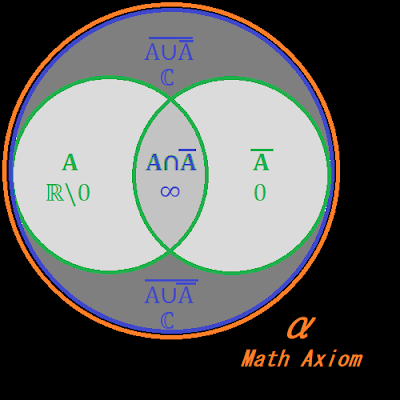
The synthesis often sounds like facing a logical contradiction at its emerging state: This is something neither A nor no-A by means of the mathematical logics.  However, such as in mathematics, there are several elements like something neither A nor No-A when their fundamental criterion such as mathematical axiom varies their existence.  For instance, where the real numbers R (A) and 0 (0R), the nothingness of A (zero R i.e. No-A), exist, there are the infinity (R (A) divided by 0R: Their composition becomes neither R nor 0R) as well as the complex number (the root of negative R transforming it to neither R nor 0R) by the mathematical rule based on the axiom. The mathematical axiom verification enables their existence.

In terms of social science and ethics (political philosophy), this statement holds whereas the pure reasoning based on the pure logics without the ethical principle often neglects focusing on the synthesis because it is imply judged as contradiction. By contrast, by following the ethical principle as an individuals' guideline leading themselves by correcting their pathway, it may eventually guide them to something optimum to achieve their ethical ideal.

It does not have to be perfect as their pathway can be fluctuating and often deviating from their guideline principle. Nevertheless, it is important for not only politics and social ethics but also each individual's business and career plan to stick to their initial motivation and life-long dream. Whenever there is an exogenous force or an endogenous change caused by natural phenomena and/or oppressive antagonistic forces, the guideline principle corrects their pathway. 


It is neither the realism (accepting the reality as it is) nor the idealism (expecting the perfect ideal state to be accomplished): It is the conceptualism offering a feasible concept in the terrestrial world even it is not perfect as what the idealists claim for. Individuals' pathway in their own private life and their social activity participation can be drifting in their imperfect shape. However, this imperfection encourages these individuals to discover their own optimum way to make them happy while referring to the ethical principle as their guideline.

Overall, human society must keep evolving to tackle with various issues challenging individuals and their surrounding environments. The external transcendental super-being such as one called the unmovable mover, our creator, God, or something else in someone's own language defines the existing terrestrial beings as imperfect to encourage them to exert their own power of solving their problems and improve themselves as well as their surrounding environments with their own struggles.  At the same time, it defines some criteria required for survival and improvement which are taught and retained as the wisdom for a relative long term. Thus, the concept based on discovery and wisdom may work as a hint for individuals to achieve the transcendental synthesis of their social interests.