
Thursday, August 02, 2018


Wednesday, August 01, 2018
Empirical evidence prooving Liquidity-trap: Lower interest rate does not stimulate economy
This was posted on 4th Septermber, 2011:
Why is the economic recovery not stimulated even though the central banks offer the sizably low interest rate which is close to zero? Many people imagine that if the interest rate is low, the economy should be stimulated. The reason is that the cost for companies paying the interest rate of their debt and for entrepreneurs planning to borrow money to start their new business is low.
However, this is only the microeconomic factor, which is a static analysis focusing on the individual economic agent's performance, and does not take account of the time effect and the environment interacting with this agent's performance. This means it ignores the macroeconomic factor which is the dynamic analysis taking account of the future expectation and the wide scale economic environment.
The problem is that, even though the interest rate, the cost of borrowing, is low, if the expected return from investing to economy is low, banks and the other forms of financial institutions are reluctant to lend their money. In addition, the entrepreneurs are discouraged from borrowing money to invest to their business if the future expectation is not good for their business due to the current economic environment.
This phenomenon is called the "liquidity-trap" which was originally mentioned by Professor John Maynard Keynes. During the world economic depression in 1929, many economists thought the economy would be eventually recovered if the central bank tried to increase the liquidity of money supplied by lowering the cost of borrowing money. However, this expectation did not happen. Keynes analysed this problem by explaining the liquidity of money was stuck in their flow due to the lack of confidence in investment. Keynes also put emphasis on need of the price inflation to increase the investment volume. If the price inflation is taking place, the real value of the money borrowed at a certain past time period goes down, and the nominal value of the revenue gained at each time period keeps increasing (the real value of the revenue is kept almost constant). By contrast, if the price deflation (i.e. the "minus" inflation) occurs, the financial economic situation is the opposite effect of the inflationary period.
This project assessed whether positive or negative the correlation between the interest rate and the investment share of GDP. London Interbank Offered Rate has been newly introduced by the IMF, WEO Database, Country Data recently so this newly introduced variable was used as the variable representing the interest rate. Although, there are only the US and Japanese one for London Interbank Offered Rate, the USA and Japan are the best candidate countries to assess the effect of the liquidity trap because they are experiencing now! In addition this variable is a very useful indicator of the interest rate effect on economy because this interest rate index takes account of the various money transactions between various banks and the other forms of financial institutions.
* "London Interbank Offered Rate" is denoted as "the interest rate" and "the nominal interest rate" in this project.
* There are two indicators of the investment share of GDP. One is "the percentage investment share of GDP times the (natural) log of GDP", and another is "the (natural) log of the GDP times the percentage investment share of GDP"
* All the logalisms used in this project is the natural log.
* These OLS regression analyses are based on the fixed effect model which involves the dummy variables (the binary variable) for the different units (countries).
* The variable called "Time" denotes the time trend whose valometer increases as the time passes.
First of all, the simple Ordinary Least Squares (OLS) regression analysis was run. The investment share of GDP is regressed on the logged interest rate. The result offered is shown in the figure below:
This OLS regression is the percentage investment share of GDP times the (natural) log of GDP:

This OLS regression is the (natural) log of the GDP times the percentage investment share of GDP:

These results show that the positive correlation between The investment share of GDP and the interest rate. It is really disappointing for those who trust the monetary policy of both the current US Federal Reserve Bank and Bank of Japan. It is also surprising for many microeconomic financial analysts because it indicates that the business grows when the cost of borrowing and the interest payment on company-debt is high. This contradicts the basic static ( = nominal) cost and benefit analysis. Thus, these results affirm that we certainly need a complex dynamic ( = real ) cost and benefit analysis.
Is it logical to say that "We should rather increase the interest rate to recover our economy?" No, this is not logical. It is not logical to say "Higher the cost for companies and entrepreneurs is, higher the confidence of consumption and investment is".
This aspect suspects that the interest rate is not exogenous (the condition to be a good explanatory variable not being controlled by any other factors (variables)) so that it can be endogenous (controlled by some other factors. This situation leads the analysis inconsistent if this endogenous variable is used as an explanatory variable).
There is an international financial economic theory stating that the interest rate is given by the exogenous factor we are hardly able to control rather than we give the interest rate to control the economic situation. This theory suggests that the interest rate is set according the price inflation rate to make the real interest rate (the nominal interest rate minus the price inflation rate) to as zero as possible. Therefore, this theory rejects the classical and the monetarist theory of the interest rate which states that the low interest rate lowers the cost for the entrepreneurs i.e. stimulating the economy. This theory claims that the interest rate is an indicator of the price inflation. It means that, when the interest rate is high, the expected rate of the price inflation, which increases the business opportunities, is high.
* This is the theory in the developed economies where the hyper-inflation risk caused by the mal-fiscal functioning tends to be low.
All in all, there is a room to assume that the inflation rate stimulates the investment share of the GDP. Therefore, it tested if the logged investment share of GDP is positively correlated with both the interest rate and the logged price inflation rate (In the later texts, the price inflation rate is written as the inflation) as follows:

-

-

This proves that the inflation is positively correlated with the investment share of GDP. However, there is a concern that the interest rate and the inflation are correlated each other. If the explanatory variables in one OLS regression are correlated each other, it tends to disturb the OLS analysis result.
So, it suggests to assess the endogeneity of the explanatory variable. By following Keynes' theory and the theory claiming the interest rate is given, the interest rate is assumed to be positively correlated to the inflation. This inference also claims that the Two Stage Least Square (TSLS) regression analysis, instead of the OLS, to regress the investment share of GDP. The first stage regression, which is called the "auxiliary regression", to regress the interest rate, the candidate explanatory variable of the investment share of GDP, on the inflation, the instrument variable of the interest rate, the explanatory variable.
The other reason why the inflation is wanted to be used as an instrument variable and the interest rate is wanted to be used as an instrumented explanatory variable is that this project attempted to explain the whole mechanism explained by the theory and assess if this theory actually proves the real world economic situation. Because it assumes that the interest rate is highly controlled by the inflation. Therefore, the inflation had to be used as an instrument variables so that it cannot be used as one of the explanatory variables.

-

These results proved that the inflation is positively correlated with the interest rate as the theories suggest.
The fitted value of the interest rate instrumented by the inflation rate (and Time if necessary) was saved to use for the second stage regression, which is the primary regression of the TSLS analysis.
There are two analyses because "the percentage investment share of GDP times the (natural) log of GDP" and "the (natural) log of the GDP times the percentage investment share of GDP" are assessed a little bit differently. The former one was regressed on the interest rate instrumented by both the inflation rate and the Time meanwhile the latter one was regressed on the interest rate instrumented by the inflation rate only.
Both kinds of regression analyses are based on the non-linear model because there is assumed to be the optimum interest rate affected by the optimum inflation rate which maximise the investment share of GDP. The positive but reasonable rate of the inflation is a indication of the circulation of economic activities running well and the economy is expanding not too fast. However, the positive and high inflation rate decreases the real value of individual economic agents' income, and discourages saving, the source of financial economy, and supply of the investment available (The net present value of the amount of money invested declines over time). In addition, as the (nominal) interest rate is determined by the inflation rate (in order to set the real interest rate (the interest rate minus the inflation)). Therefore, in order to find the optimum inflation rate and then the optimum interest rate (= The intercept + Coeff. x "The inflation" + error) are required to find out!
The regressions below are "the percentage investment share of GDP times the (natural) log of GDP" on the interest rate instrumented by the inflation and the time trend:

-

According to the three criteria (denoting the smaller number shown by each criterion implies the better model), the regression above without including the time trend as one of the explanatory variables is a better model than the other with the time trend as one of the explanatory variables. This reason would be because the time trend is already included in the instrument variable of the interest rate.
The other sorts of models with various kinds of formulae, such as the liner model ( I = a + b x R + error) and the cubic formula ( I a + b_1 x R + b_2 R^2 + b_3^3 + error ), are regressed. Nonetheless, the square formula (The second degree formula) came up as the best model to demonstrate the correlation between the investment rate times the GDP. By observing the both models above, both formulae has the global maximum value. Therefore, this result indicates that the optimum interest rate instrumented by the inflation rate exists.
The figure below contains the matrix graph (the top one) showing what the interest rate given by the inflation and the year is, and the other (the bottom one) showing what "the percentage investment share of GDP times the (natural) log of GDP" given by the interest rate instrumented by the inflation and the time trend is:

These graphs indicate the following phenomena:
# The real interest rate (the gab between the interest rate and the inflation rate) tends to be minimised as the year (Time) passes.
(This could be considered because of the global financial liberalisation which has increased the degree of competitiveness of the global financial market. )
# The optimum interest to stimulate the economic activity is between 1.77 and 2.14.
# In 1980 (and possibly before), the high inflation is discouraged the economic activity level more than the low inflation.
# In 1990 and after, the lower inflation discourages the economic activity level far more than the high inflation.
The regression below assessed "the (natural) log of the GDP times the percentage investment share of GDP" with the same method as "the percentage investment share of GDP times the (natural) log of GDP" assessed in the previous regressions.

For "the (natural) log of the GDP times the percentage investment share of GDP", the interest rate is only instrumented by the inflation because this model needed to include the time trend as one of the explanatory variables. This reason is because the dependent variable "the (natural) log of the GDP times the percentage investment share of GDP" is increasing over time so that the regression model had to involve the explanatory variable explaining this factor. It also had to exclude the time trend from the instrument variable of the interest rate in order to avoid including one same variable for two different indicators.
The figure below contains the matrix graph (the top one) showing what the interest rate given by the inflation and the year is, and the other (the bottom one) showing what "the (natural) log of the GDP times the percentage investment share of GDP" given by the time trend (Exogenous) and the interest rate instrumented by the inflation is:

These graphs indicate the following phenomena:
# The optimum inflation rate stimulating the economic activity is 2.48, and the optimum interest rate is 1.5 then.
# Lower the interest rate is implies lower the economic activity level is.
Having observed these results given by the regression analysis (based on the fixed effect model), the sizably low interest rate is less likely to increase the liquidity of the money supply flowing into economy. As Prof. Keynes suggested, the USA and Japan may need to expect the exogenous shock in their economy, such as technological growth and finding a new natural resource and/or a brand new invention, and/or the strong positive planning policy intervention other than the monetary policy.
All in all, the policy makers cannot merely control the interest rate to expect the economic recovery. Hence, the current US and Japanese monetary policy seems to be very unreliable to stimulate the economic recovery.
Why is the economic recovery not stimulated even though the central banks offer the sizably low interest rate which is close to zero? Many people imagine that if the interest rate is low, the economy should be stimulated. The reason is that the cost for companies paying the interest rate of their debt and for entrepreneurs planning to borrow money to start their new business is low.
However, this is only the microeconomic factor, which is a static analysis focusing on the individual economic agent's performance, and does not take account of the time effect and the environment interacting with this agent's performance. This means it ignores the macroeconomic factor which is the dynamic analysis taking account of the future expectation and the wide scale economic environment.
The problem is that, even though the interest rate, the cost of borrowing, is low, if the expected return from investing to economy is low, banks and the other forms of financial institutions are reluctant to lend their money. In addition, the entrepreneurs are discouraged from borrowing money to invest to their business if the future expectation is not good for their business due to the current economic environment.
This phenomenon is called the "liquidity-trap" which was originally mentioned by Professor John Maynard Keynes. During the world economic depression in 1929, many economists thought the economy would be eventually recovered if the central bank tried to increase the liquidity of money supplied by lowering the cost of borrowing money. However, this expectation did not happen. Keynes analysed this problem by explaining the liquidity of money was stuck in their flow due to the lack of confidence in investment. Keynes also put emphasis on need of the price inflation to increase the investment volume. If the price inflation is taking place, the real value of the money borrowed at a certain past time period goes down, and the nominal value of the revenue gained at each time period keeps increasing (the real value of the revenue is kept almost constant). By contrast, if the price deflation (i.e. the "minus" inflation) occurs, the financial economic situation is the opposite effect of the inflationary period.
This project assessed whether positive or negative the correlation between the interest rate and the investment share of GDP. London Interbank Offered Rate has been newly introduced by the IMF, WEO Database, Country Data recently so this newly introduced variable was used as the variable representing the interest rate. Although, there are only the US and Japanese one for London Interbank Offered Rate, the USA and Japan are the best candidate countries to assess the effect of the liquidity trap because they are experiencing now! In addition this variable is a very useful indicator of the interest rate effect on economy because this interest rate index takes account of the various money transactions between various banks and the other forms of financial institutions.
* "London Interbank Offered Rate" is denoted as "the interest rate" and "the nominal interest rate" in this project.
* There are two indicators of the investment share of GDP. One is "the percentage investment share of GDP times the (natural) log of GDP", and another is "the (natural) log of the GDP times the percentage investment share of GDP"
* All the logalisms used in this project is the natural log.
* These OLS regression analyses are based on the fixed effect model which involves the dummy variables (the binary variable) for the different units (countries).
* The variable called "Time" denotes the time trend whose valometer increases as the time passes.
First of all, the simple Ordinary Least Squares (OLS) regression analysis was run. The investment share of GDP is regressed on the logged interest rate. The result offered is shown in the figure below:
This OLS regression is the percentage investment share of GDP times the (natural) log of GDP:

This OLS regression is the (natural) log of the GDP times the percentage investment share of GDP:

These results show that the positive correlation between The investment share of GDP and the interest rate. It is really disappointing for those who trust the monetary policy of both the current US Federal Reserve Bank and Bank of Japan. It is also surprising for many microeconomic financial analysts because it indicates that the business grows when the cost of borrowing and the interest payment on company-debt is high. This contradicts the basic static ( = nominal) cost and benefit analysis. Thus, these results affirm that we certainly need a complex dynamic ( = real ) cost and benefit analysis.
Is it logical to say that "We should rather increase the interest rate to recover our economy?" No, this is not logical. It is not logical to say "Higher the cost for companies and entrepreneurs is, higher the confidence of consumption and investment is".
This aspect suspects that the interest rate is not exogenous (the condition to be a good explanatory variable not being controlled by any other factors (variables)) so that it can be endogenous (controlled by some other factors. This situation leads the analysis inconsistent if this endogenous variable is used as an explanatory variable).
There is an international financial economic theory stating that the interest rate is given by the exogenous factor we are hardly able to control rather than we give the interest rate to control the economic situation. This theory suggests that the interest rate is set according the price inflation rate to make the real interest rate (the nominal interest rate minus the price inflation rate) to as zero as possible. Therefore, this theory rejects the classical and the monetarist theory of the interest rate which states that the low interest rate lowers the cost for the entrepreneurs i.e. stimulating the economy. This theory claims that the interest rate is an indicator of the price inflation. It means that, when the interest rate is high, the expected rate of the price inflation, which increases the business opportunities, is high.
* This is the theory in the developed economies where the hyper-inflation risk caused by the mal-fiscal functioning tends to be low.
All in all, there is a room to assume that the inflation rate stimulates the investment share of the GDP. Therefore, it tested if the logged investment share of GDP is positively correlated with both the interest rate and the logged price inflation rate (In the later texts, the price inflation rate is written as the inflation) as follows:

-

-

This proves that the inflation is positively correlated with the investment share of GDP. However, there is a concern that the interest rate and the inflation are correlated each other. If the explanatory variables in one OLS regression are correlated each other, it tends to disturb the OLS analysis result.
So, it suggests to assess the endogeneity of the explanatory variable. By following Keynes' theory and the theory claiming the interest rate is given, the interest rate is assumed to be positively correlated to the inflation. This inference also claims that the Two Stage Least Square (TSLS) regression analysis, instead of the OLS, to regress the investment share of GDP. The first stage regression, which is called the "auxiliary regression", to regress the interest rate, the candidate explanatory variable of the investment share of GDP, on the inflation, the instrument variable of the interest rate, the explanatory variable.
The other reason why the inflation is wanted to be used as an instrument variable and the interest rate is wanted to be used as an instrumented explanatory variable is that this project attempted to explain the whole mechanism explained by the theory and assess if this theory actually proves the real world economic situation. Because it assumes that the interest rate is highly controlled by the inflation. Therefore, the inflation had to be used as an instrument variables so that it cannot be used as one of the explanatory variables.

-

These results proved that the inflation is positively correlated with the interest rate as the theories suggest.
The fitted value of the interest rate instrumented by the inflation rate (and Time if necessary) was saved to use for the second stage regression, which is the primary regression of the TSLS analysis.
There are two analyses because "the percentage investment share of GDP times the (natural) log of GDP" and "the (natural) log of the GDP times the percentage investment share of GDP" are assessed a little bit differently. The former one was regressed on the interest rate instrumented by both the inflation rate and the Time meanwhile the latter one was regressed on the interest rate instrumented by the inflation rate only.
Both kinds of regression analyses are based on the non-linear model because there is assumed to be the optimum interest rate affected by the optimum inflation rate which maximise the investment share of GDP. The positive but reasonable rate of the inflation is a indication of the circulation of economic activities running well and the economy is expanding not too fast. However, the positive and high inflation rate decreases the real value of individual economic agents' income, and discourages saving, the source of financial economy, and supply of the investment available (The net present value of the amount of money invested declines over time). In addition, as the (nominal) interest rate is determined by the inflation rate (in order to set the real interest rate (the interest rate minus the inflation)). Therefore, in order to find the optimum inflation rate and then the optimum interest rate (= The intercept + Coeff. x "The inflation" + error) are required to find out!
The regressions below are "the percentage investment share of GDP times the (natural) log of GDP" on the interest rate instrumented by the inflation and the time trend:

-

According to the three criteria (denoting the smaller number shown by each criterion implies the better model), the regression above without including the time trend as one of the explanatory variables is a better model than the other with the time trend as one of the explanatory variables. This reason would be because the time trend is already included in the instrument variable of the interest rate.
The other sorts of models with various kinds of formulae, such as the liner model ( I = a + b x R + error) and the cubic formula ( I a + b_1 x R + b_2 R^2 + b_3^3 + error ), are regressed. Nonetheless, the square formula (The second degree formula) came up as the best model to demonstrate the correlation between the investment rate times the GDP. By observing the both models above, both formulae has the global maximum value. Therefore, this result indicates that the optimum interest rate instrumented by the inflation rate exists.
The figure below contains the matrix graph (the top one) showing what the interest rate given by the inflation and the year is, and the other (the bottom one) showing what "the percentage investment share of GDP times the (natural) log of GDP" given by the interest rate instrumented by the inflation and the time trend is:

These graphs indicate the following phenomena:
# The real interest rate (the gab between the interest rate and the inflation rate) tends to be minimised as the year (Time) passes.
(This could be considered because of the global financial liberalisation which has increased the degree of competitiveness of the global financial market. )
# The optimum interest to stimulate the economic activity is between 1.77 and 2.14.
# In 1980 (and possibly before), the high inflation is discouraged the economic activity level more than the low inflation.
# In 1990 and after, the lower inflation discourages the economic activity level far more than the high inflation.
The regression below assessed "the (natural) log of the GDP times the percentage investment share of GDP" with the same method as "the percentage investment share of GDP times the (natural) log of GDP" assessed in the previous regressions.

For "the (natural) log of the GDP times the percentage investment share of GDP", the interest rate is only instrumented by the inflation because this model needed to include the time trend as one of the explanatory variables. This reason is because the dependent variable "the (natural) log of the GDP times the percentage investment share of GDP" is increasing over time so that the regression model had to involve the explanatory variable explaining this factor. It also had to exclude the time trend from the instrument variable of the interest rate in order to avoid including one same variable for two different indicators.
The figure below contains the matrix graph (the top one) showing what the interest rate given by the inflation and the year is, and the other (the bottom one) showing what "the (natural) log of the GDP times the percentage investment share of GDP" given by the time trend (Exogenous) and the interest rate instrumented by the inflation is:

These graphs indicate the following phenomena:
# The optimum inflation rate stimulating the economic activity is 2.48, and the optimum interest rate is 1.5 then.
# Lower the interest rate is implies lower the economic activity level is.
Having observed these results given by the regression analysis (based on the fixed effect model), the sizably low interest rate is less likely to increase the liquidity of the money supply flowing into economy. As Prof. Keynes suggested, the USA and Japan may need to expect the exogenous shock in their economy, such as technological growth and finding a new natural resource and/or a brand new invention, and/or the strong positive planning policy intervention other than the monetary policy.
All in all, the policy makers cannot merely control the interest rate to expect the economic recovery. Hence, the current US and Japanese monetary policy seems to be very unreliable to stimulate the economic recovery.
Sunday, June 17, 2018
Monopsony: Why unemployment rises despite the inflation
Recently, many economists wonder why unemployment rises whilst the price is inflating and more jobs are available than immediately after the last financial crisis especially in the developed economies. Japanese labour market is the remarkable market by means of observing this problem.
According to the common sense of the mainstream economic pattern, employment should rise when the price is on trend toward the inflation and the labour. Furthermore, the number of job recruits has increased although not so many candidates apply for.
The answer about it came up after considering who still holds more power in the market. The matter is that the bargaining power is not symmetric in the labour market. On the top of the bargaining power, the involuntary unemployment caused by the wage lower than the efficient wage also influences this situation. This situation is where the purchaser holds more power than the supplier, and this is called monopsony.

Focusing on the graph above, the wage is considered as the cost for the employer (purchaser) who attempts to maximise the profit by lowering the wage s/he has to pay. Then, instead of purchasing labourers (supplier) at the equilibrium point where the wage labourers are willing to receive and the wage the employer is willing to pay meet, the employer sets the wage (the cost) lower than the equilibrium point.
Under this case scenario, the employer is able to set the wage where the marginal revenue and the marginal cost intercept each other so that s/he can enjoy maximising profit. Even though the price inflation takes place, as long as the employer holds the power of controlling the supply of labourers, the price inflation does not force this employer to increase the wage.
The labourers still have a weak bargaining power because the unemployment is still high so that the labourers still face an intensive competition when they are looking for a desirable job. The fundamental problem is that the wage rate reduced by the monopsonic power of the employers does not fulfil what many labourers want. Therefore, the involuntary unemployment emerges despite a rise of the employment opportunity.
The employers are still happy because there are still some employers willing to be hired at the rate lower than the equilibrium point. This is also caused by the discouraged labour mobility where individual labourers are reluctant or handicapped to change a job flexibly. Many individual labourers have become too precautious to come out from they have already secured a job. This situation occurs under the risky environment of finding an alternative desirable employment opportunity and the intensely regulated market discouraging employers from being flexible to hire new employees.
There are various ideas of solving this matter to increase the employment and the wage level. Imposing the minimum wage regulation pushes the wage meeting the equilibrium point the wage will rise and employment may rise when it reaches to just the equilibrium point. Deregulating the labour market may increase the labour mobility by motivating employers to flexibly hire employers without being worried about the regulation after hiring them and encouraging employers finding a better employment opportunity.
Someone may claim that it can be caused by the qualitative issue than the quantitative issue such as the wage and the quantity. The matter can be how enjoyable the job is for employers especially for the younger generation. In case of many developed countries, the work ethics differs across different generation groups of individuals. Enjoyability related to the working environment and the characteristics of colleagues may affect. In addition, the employers' mentality of choosing employees may restrict her/his preference of hiring new employees due to the misunderstanding of what the current labourers claim for nowadays.
Overall, although there are various potential solutions, the current problem of the monopsony does not seem to be solved yet. Many of those who are concerned with these aforementioned matter need to revise this asymmetric shape of the market to rationally tackle with it after understanding its mechanism.
According to the common sense of the mainstream economic pattern, employment should rise when the price is on trend toward the inflation and the labour. Furthermore, the number of job recruits has increased although not so many candidates apply for.
The answer about it came up after considering who still holds more power in the market. The matter is that the bargaining power is not symmetric in the labour market. On the top of the bargaining power, the involuntary unemployment caused by the wage lower than the efficient wage also influences this situation. This situation is where the purchaser holds more power than the supplier, and this is called monopsony.

Focusing on the graph above, the wage is considered as the cost for the employer (purchaser) who attempts to maximise the profit by lowering the wage s/he has to pay. Then, instead of purchasing labourers (supplier) at the equilibrium point where the wage labourers are willing to receive and the wage the employer is willing to pay meet, the employer sets the wage (the cost) lower than the equilibrium point.
Under this case scenario, the employer is able to set the wage where the marginal revenue and the marginal cost intercept each other so that s/he can enjoy maximising profit. Even though the price inflation takes place, as long as the employer holds the power of controlling the supply of labourers, the price inflation does not force this employer to increase the wage.
The labourers still have a weak bargaining power because the unemployment is still high so that the labourers still face an intensive competition when they are looking for a desirable job. The fundamental problem is that the wage rate reduced by the monopsonic power of the employers does not fulfil what many labourers want. Therefore, the involuntary unemployment emerges despite a rise of the employment opportunity.
The employers are still happy because there are still some employers willing to be hired at the rate lower than the equilibrium point. This is also caused by the discouraged labour mobility where individual labourers are reluctant or handicapped to change a job flexibly. Many individual labourers have become too precautious to come out from they have already secured a job. This situation occurs under the risky environment of finding an alternative desirable employment opportunity and the intensely regulated market discouraging employers from being flexible to hire new employees.
There are various ideas of solving this matter to increase the employment and the wage level. Imposing the minimum wage regulation pushes the wage meeting the equilibrium point the wage will rise and employment may rise when it reaches to just the equilibrium point. Deregulating the labour market may increase the labour mobility by motivating employers to flexibly hire employers without being worried about the regulation after hiring them and encouraging employers finding a better employment opportunity.
Someone may claim that it can be caused by the qualitative issue than the quantitative issue such as the wage and the quantity. The matter can be how enjoyable the job is for employers especially for the younger generation. In case of many developed countries, the work ethics differs across different generation groups of individuals. Enjoyability related to the working environment and the characteristics of colleagues may affect. In addition, the employers' mentality of choosing employees may restrict her/his preference of hiring new employees due to the misunderstanding of what the current labourers claim for nowadays.
Overall, although there are various potential solutions, the current problem of the monopsony does not seem to be solved yet. Many of those who are concerned with these aforementioned matter need to revise this asymmetric shape of the market to rationally tackle with it after understanding its mechanism.
Saturday, June 16, 2018
The World War III (WW3) Predicted (Mere simulation)
* This is a post archive "The 2014 New Year Forecast, and The World War III (WW3) Predicted"
*** The World War III (WW3) Predicted ***

* This is just a simulation, and I hope this world war will not happen in real.
1. The 2014 New Year Forecast:
As it has been mentioned in an article "Sunday, June 27, 2010: According to Kondratieff cycle, the Spring won't come until 2014 at the earliest", the year in the Spring will not come until 2014 at the earliest owing to the analysis based on the combination of Kondratieff 's economic cycle theory, the New Economic Geography theory, and Emile Durkheim 's sociological theory of Anomie. The economic downturn in this half decade was the severest in the world history due to its scale of the impact.
Fortunately, in the world average, the economic downturn seem to have hit the bottom, and some countries' economy seems to have started recovering little by little. America, Britain, and Japan seem to have rode on the track of the recovery according to the various numerical data sets shown by many institutions. The Eurozone is still stagnating due to their undetermined attitude of reforming their economy and the inflexibility caused by the current unstable fiscal policy management. But, the Eurozone seems to put more priority on the stability over the artificially stimulated recovery and strictly impose the austerity plan conducting them to rationally manage their fiscal policy. So, the Eurozone economy will neither rapidly recover nor dramatically fall down. The economy of both the emerging economies and the LDCs still keeps its steady economic growth, even though its speed became lower than it used to be, thanks to the abundant investment flow there in the globalised world economy.
Nevertheless, as the commonsense of economics tells, the effect of an economic downturn are usually lugging over the future time periods, and their scale is huge when the time of downturn is long and the scale is wide. For example, the unemployment created in the previous years will still remain to be high in the present and the near future time period.
The changing effect of the advanced economies over the emerging and LDC economies is also lugging. At the first step of the economic downturn of the advanced economies, the investors usually switch their investing countries from the advanced regions to the emerging or the LDC regions. However, when the marginal return from these investments starts declining, these investors stop investing especially when their income gain from their own home country keeps declining. In addition, when the advanced economies starts showing the sign of economic recovery after hitting the bottom of the recession, the money lenders in the emerging and the LDC economies severely suffer as shown in Asia in 1990s. Because the interest rate of the emerging and the LDC economies are dependent on the investment from the advanced economies, the interest rates of both regions are often highly positively correlated. Therefore, the sudden interest rate rise of any central banks of the advanced economies will increase the total costs of firms in these emerging and LDC economies.
All in all, the backlog effect of the past economic downturn of the advanced economies will hit the emerging economies and LDCs from this year onward. So, the tension caused by this backlog effect of the economic downturn might cause the world political havoc.
2. Potential Conflict between China and India over the fresh water resource:
Both China and India are the countries which are experiencing a rapid economic growth in a huge scale and have a huge population more than 1 billion. When the economic growth of both starts going down, the scale of the negative effects caused by the downturn will be enormous enough to increase the mass's frustration. Even though the economic growth speed goes down compared to the previous years, their government and corporations will inject their economic stimulus to keep their economy growing. They still aspire to encourage their further industrialisation process, and then the natural resource will be furthermore demanded increase their overall productivity.
 The most fundamentally required natural resource for industrialisation is fresh water. The other kinds of natural resources are relatively more substitutable than fresh water. The interesting fact is that both China and India, two massive nations, share the same location of their fresh water supply source which is Himalayas. Because both economies are slowly but steadily grows and the population of these two nations are still rapidly growing, these countries will require to secure gaining the water supply. These two countries will want to obtain more territories in Himalayas than the counterpart. So, they may attempt to monopolise the fresh water supply even with force.
The wage growth may start to be lowered with comparison to the price inflation, and the involuntary unemployment may start increasing due to the real wage decline and the switch from the labour intensive to the capital intensive owing to the technological advancement. Because of this slow growth, the social mobility among people of these two nation also will be significantly lowered than the previous years. This economic aspect will cause the frustration among the majority people in these two nations.
On the top of economics, there is an interesting demographic situation of these two nations related to increasing frustration there which may cause the war. Both China and India have a proportionally very high male population as shown in the table below:

The amazing fact is that the male population minus the female population of the 0 - 54 years old is 43 millions in China, and 49 millions in India. The sexually active male population in the present and the near future is enormously high compared to the female counterpart. This indicates that more young males in these two nations will be sexually frustrated.
The majority mass start expecting their nation to expand their business opportunities and to obtain a bigger land mass and more natural resources. On the top of this material needs and wants, the tremendously high young frustrated male population will transform their personality to be more aggressive.
The combination of these frustrations often increases the tension provoking a big war even by causing a small friction between these two nations. Therefore, the friction caused by the competition to secure the potential conflict over the precious fresh water resource in Himalaya looks like a trigger of a war between them.
3. Russian assists India, and they form the India & Russia Alliance:
The geopolitical situation of this world from 20th century onward encourages the antagonism between China and Russia. They occasionally formed an unfriendly alliance, but have never been friendly to each other and often attempted to sabotage the other in the foreign diplomacy. Both China and Russia are the nations who have a strong feeling of pride in themselves. They always maintain their dominance to be a suzerain nation, and so have never approved to be fully controlled by any other nation. Therefore, China and Russia have been competing with each other as the rivals or even the potential enemies of each other. During the time when they formed the alliance, they looked for an enemy of their rival to create a friendly diplomatic tie with to sabotage their rival even though this act could abandoning their alliance.
The other reason why Russia will participate against China is the economically and militarily strong strategic bilateral relationship between India and Russia. Since the cold war, Russia has aided various LDCs to attract them to supporting the Russian side. Even though India kept its solid politically neutral stance in the Cold War, the diplomatic relation between India and Russia became friendlily attached to each other. India was the best alternative LDC to form an alliance with when China was not reliable. So, Russia was eager to establish a close friendly bilateral relation with India. Then, Russia acted as a foreign diplomatic mediator peacefully intervening between India and Pakistan, and helped Bangladesh to be independent from Pakistan. Even though Russia tried to keep this matter fair and peaceful, the contemporary Russian attitude in India continent looked India leaning doing more favour for India.
Furthermore, because China and India have been conflicting over the territories near their national boarder for a long time, China felt unpleasant about Russian friendship with India. This story has induced China and Pakistan to form the alliance as both recognised each other under the doctrine "An enemy of their enemy is their friend".
Even nowadays, this geopolitical situation has been kept as same as it was during the Cold War. This is because that their political alliance is not based on the shared political ideology: Their diplomatic relation is based on the materialistic interest in each other. India needs Russian technological aids and Russian assistance to fight against both China and Pakistan. Russia needs India as a trade partner who has the economic advantages which Russia does not have as well as to avoid China being monopolistic.
4. Reaction of the world:
Because China and Pakistan form a very close bilateral relationship, they will also form the strong friendly alliance together in the predicted war. By means of the size of a nation, their bilateral relationship will be based on an unequal relationship unlike the India&Russian alliance, and so Pakistan will be rather treated as a satellite nation of China. The interesting aspect of the international politics is that China has developed the remarkable trade relationship with the Middle East and Africa for over a millennium. Nowadays, China still retains this tradition so that China has been aggressively aiding and investing to these nations in the Middle East and Africa since China succeeded in its rapid industrialisation. Even while the USA encouraged all over the world to negatively sanction many of these nations, China did not stop its relationship with them.
The role of the developing countries with the emerging economy will be more significantly important in the new world political economic situation. Under this globalisation, the gap between the advanced economies and the LDCs will be furthermore minimised. The advanced countries will no longer experience the rapid economic growth meanwhile the rest of the world will still grow. So, attracting the support of the emerging market will be the key to hold the initiative in this predicted war as well. Therefore, both sides, the India&Russian alliance and China, will more focus on attracting the attention of these emerging market than the North America and Europe.
The key factors to forecast which countries in the world support which side, the India&Rusian alliance or China, are the historically long relationship, the proportion of the shared common ethnic group, how much China has invested to Africa, the Middle East, the Central Asia, and South America, and how different nations value China as
The majority of the European European countries will be Russian satellites due to the close ethnic and political characteristics. Even though these country have some citizens who wish to keep a distance from Russia, the political pressure groups there will be proactive to maintain their country to be loyal to Russia.
Myanmar and many central Asian countries will be China's satellites because of the massive investment from China. Malaysia and Singapore will be China leaning because of the high Chinese population. Indonesia will suffer from the dilemma between supporting the joint cause of China and Islamic countries and remaining the anti-China policy for its independent sovereignty.
Africa is the mixture of pro-China and anti-China nations. Even though majority of African countries will support China due to China's rampart investment there, there still sufficient number of countries which remain their diplomatic attitude as anti-China.
South America will be divided into the two side. Brazil's political attitude of anti-China and pro-Russia will encourage Brazil to be a remarkable satellite nation of the India&Russia alliance. Chilli also shows far away from the relationship with China. The totalitarian countries whose political tie with China is strong such as Cuba and Venezuela will become China's satellites. The other countries not politically but very economically close relationship will be China leaning.
The United States of America (The USA) will neither aggressively nor directly intervene this war between the India&Russia alliance and the alliance of China and its satellites. It does not fulfill the USA's national interest by leading either side to completely win over the others. The intervention of the USA will be indirect and implicit. The perpetuation of this war will benefit to the weapon factories in the USA so that these US war merchants will secretly sell their weapons to abroad. However, relatively speaking, the USA will be more supportive to the India&Russia alliance for the strategic reason. The USA will attempt to maintain Taiwan's independence and secure the existence of Israel, and this action will antagonise both China and Islamic nations in the Middle East.
Japan will keep its indecisive attitude in the foreign diplomatic relations, and let the others to determine how Japan should react. During the Cold War, while Russia was threatening Japan, China came close to establish a friendship with Japan. From the end of the Cold War to the current time period, China started threatening Japan. Then, since the USSR collapsed, Russia and Japan have no longer become a significant political enemies any more. So, Russia stated to attempt to approach to Japan for a friendly diplomacy in order to counter China's threat together. India also shows its interest in assisting Japan militarily threatened by China.
Europe will be divided into three groups, China-leaning, Russia-leaning, and neutral. Because Europe has no longer hold a strong initiative over the world economy and politics, European influence will be not significant compared to countries in Asia, Africa, and South America. The core member states of the EU such as France, Germany, and Benelux countries will be relatively more China leaning because of their conflicting relationship with Russia. Some EU nations which have a strong anti-China sentiment among their citizens will be relatively more Russian leaning. The deep Eastern Europe will be under control of Russia. The UK and Ireland will keep their neutrality, and attempt to keep the diplomatic tie with both sides. Overall, Europe's involvement into this predicted warfare is very minimal because they will be too preoccupied to solve their own ongoing economic and political problems.
The map below is drawn by the previously mentioned analyses:

5. Hot, Cold, or Mild War?
If it is to happen in real, this war will be the mild war. The number and the size of the total wars which will take place will not be big as much as the previous two world wars but will be bigger than the Cold War. There will be guerrilla warfare frequently as much as the Cold War. This war will be more intense and direct than the Cold War. The temperature of this predicted war will be mild, neither hot as much as the previous two WWs nor the Cold War.
This analysis is just a simulation to forecast what will happen if the aforementioned tensions become serious so that the war is not officially predicted to be provoked. Nonetheless, this analysis will help to forecast the economic and political dynamic changes in this world from 2014 onward.
*** The World War III (WW3) Predicted ***

* This is just a simulation, and I hope this world war will not happen in real.
1. The 2014 New Year Forecast:
As it has been mentioned in an article "Sunday, June 27, 2010: According to Kondratieff cycle, the Spring won't come until 2014 at the earliest", the year in the Spring will not come until 2014 at the earliest owing to the analysis based on the combination of Kondratieff 's economic cycle theory, the New Economic Geography theory, and Emile Durkheim 's sociological theory of Anomie. The economic downturn in this half decade was the severest in the world history due to its scale of the impact.
Fortunately, in the world average, the economic downturn seem to have hit the bottom, and some countries' economy seems to have started recovering little by little. America, Britain, and Japan seem to have rode on the track of the recovery according to the various numerical data sets shown by many institutions. The Eurozone is still stagnating due to their undetermined attitude of reforming their economy and the inflexibility caused by the current unstable fiscal policy management. But, the Eurozone seems to put more priority on the stability over the artificially stimulated recovery and strictly impose the austerity plan conducting them to rationally manage their fiscal policy. So, the Eurozone economy will neither rapidly recover nor dramatically fall down. The economy of both the emerging economies and the LDCs still keeps its steady economic growth, even though its speed became lower than it used to be, thanks to the abundant investment flow there in the globalised world economy.
Nevertheless, as the commonsense of economics tells, the effect of an economic downturn are usually lugging over the future time periods, and their scale is huge when the time of downturn is long and the scale is wide. For example, the unemployment created in the previous years will still remain to be high in the present and the near future time period.
The changing effect of the advanced economies over the emerging and LDC economies is also lugging. At the first step of the economic downturn of the advanced economies, the investors usually switch their investing countries from the advanced regions to the emerging or the LDC regions. However, when the marginal return from these investments starts declining, these investors stop investing especially when their income gain from their own home country keeps declining. In addition, when the advanced economies starts showing the sign of economic recovery after hitting the bottom of the recession, the money lenders in the emerging and the LDC economies severely suffer as shown in Asia in 1990s. Because the interest rate of the emerging and the LDC economies are dependent on the investment from the advanced economies, the interest rates of both regions are often highly positively correlated. Therefore, the sudden interest rate rise of any central banks of the advanced economies will increase the total costs of firms in these emerging and LDC economies.
All in all, the backlog effect of the past economic downturn of the advanced economies will hit the emerging economies and LDCs from this year onward. So, the tension caused by this backlog effect of the economic downturn might cause the world political havoc.
2. Potential Conflict between China and India over the fresh water resource:
Both China and India are the countries which are experiencing a rapid economic growth in a huge scale and have a huge population more than 1 billion. When the economic growth of both starts going down, the scale of the negative effects caused by the downturn will be enormous enough to increase the mass's frustration. Even though the economic growth speed goes down compared to the previous years, their government and corporations will inject their economic stimulus to keep their economy growing. They still aspire to encourage their further industrialisation process, and then the natural resource will be furthermore demanded increase their overall productivity.

The wage growth may start to be lowered with comparison to the price inflation, and the involuntary unemployment may start increasing due to the real wage decline and the switch from the labour intensive to the capital intensive owing to the technological advancement. Because of this slow growth, the social mobility among people of these two nation also will be significantly lowered than the previous years. This economic aspect will cause the frustration among the majority people in these two nations.
On the top of economics, there is an interesting demographic situation of these two nations related to increasing frustration there which may cause the war. Both China and India have a proportionally very high male population as shown in the table below:
The amazing fact is that the male population minus the female population of the 0 - 54 years old is 43 millions in China, and 49 millions in India. The sexually active male population in the present and the near future is enormously high compared to the female counterpart. This indicates that more young males in these two nations will be sexually frustrated.
The majority mass start expecting their nation to expand their business opportunities and to obtain a bigger land mass and more natural resources. On the top of this material needs and wants, the tremendously high young frustrated male population will transform their personality to be more aggressive.
The combination of these frustrations often increases the tension provoking a big war even by causing a small friction between these two nations. Therefore, the friction caused by the competition to secure the potential conflict over the precious fresh water resource in Himalaya looks like a trigger of a war between them.
3. Russian assists India, and they form the India & Russia Alliance:
The geopolitical situation of this world from 20th century onward encourages the antagonism between China and Russia. They occasionally formed an unfriendly alliance, but have never been friendly to each other and often attempted to sabotage the other in the foreign diplomacy. Both China and Russia are the nations who have a strong feeling of pride in themselves. They always maintain their dominance to be a suzerain nation, and so have never approved to be fully controlled by any other nation. Therefore, China and Russia have been competing with each other as the rivals or even the potential enemies of each other. During the time when they formed the alliance, they looked for an enemy of their rival to create a friendly diplomatic tie with to sabotage their rival even though this act could abandoning their alliance.
The other reason why Russia will participate against China is the economically and militarily strong strategic bilateral relationship between India and Russia. Since the cold war, Russia has aided various LDCs to attract them to supporting the Russian side. Even though India kept its solid politically neutral stance in the Cold War, the diplomatic relation between India and Russia became friendlily attached to each other. India was the best alternative LDC to form an alliance with when China was not reliable. So, Russia was eager to establish a close friendly bilateral relation with India. Then, Russia acted as a foreign diplomatic mediator peacefully intervening between India and Pakistan, and helped Bangladesh to be independent from Pakistan. Even though Russia tried to keep this matter fair and peaceful, the contemporary Russian attitude in India continent looked India leaning doing more favour for India.
Furthermore, because China and India have been conflicting over the territories near their national boarder for a long time, China felt unpleasant about Russian friendship with India. This story has induced China and Pakistan to form the alliance as both recognised each other under the doctrine "An enemy of their enemy is their friend".
Even nowadays, this geopolitical situation has been kept as same as it was during the Cold War. This is because that their political alliance is not based on the shared political ideology: Their diplomatic relation is based on the materialistic interest in each other. India needs Russian technological aids and Russian assistance to fight against both China and Pakistan. Russia needs India as a trade partner who has the economic advantages which Russia does not have as well as to avoid China being monopolistic.
4. Reaction of the world:
Because China and Pakistan form a very close bilateral relationship, they will also form the strong friendly alliance together in the predicted war. By means of the size of a nation, their bilateral relationship will be based on an unequal relationship unlike the India&Russian alliance, and so Pakistan will be rather treated as a satellite nation of China. The interesting aspect of the international politics is that China has developed the remarkable trade relationship with the Middle East and Africa for over a millennium. Nowadays, China still retains this tradition so that China has been aggressively aiding and investing to these nations in the Middle East and Africa since China succeeded in its rapid industrialisation. Even while the USA encouraged all over the world to negatively sanction many of these nations, China did not stop its relationship with them.
The role of the developing countries with the emerging economy will be more significantly important in the new world political economic situation. Under this globalisation, the gap between the advanced economies and the LDCs will be furthermore minimised. The advanced countries will no longer experience the rapid economic growth meanwhile the rest of the world will still grow. So, attracting the support of the emerging market will be the key to hold the initiative in this predicted war as well. Therefore, both sides, the India&Russian alliance and China, will more focus on attracting the attention of these emerging market than the North America and Europe.
The key factors to forecast which countries in the world support which side, the India&Rusian alliance or China, are the historically long relationship, the proportion of the shared common ethnic group, how much China has invested to Africa, the Middle East, the Central Asia, and South America, and how different nations value China as
The majority of the European European countries will be Russian satellites due to the close ethnic and political characteristics. Even though these country have some citizens who wish to keep a distance from Russia, the political pressure groups there will be proactive to maintain their country to be loyal to Russia.
Myanmar and many central Asian countries will be China's satellites because of the massive investment from China. Malaysia and Singapore will be China leaning because of the high Chinese population. Indonesia will suffer from the dilemma between supporting the joint cause of China and Islamic countries and remaining the anti-China policy for its independent sovereignty.
Africa is the mixture of pro-China and anti-China nations. Even though majority of African countries will support China due to China's rampart investment there, there still sufficient number of countries which remain their diplomatic attitude as anti-China.
South America will be divided into the two side. Brazil's political attitude of anti-China and pro-Russia will encourage Brazil to be a remarkable satellite nation of the India&Russia alliance. Chilli also shows far away from the relationship with China. The totalitarian countries whose political tie with China is strong such as Cuba and Venezuela will become China's satellites. The other countries not politically but very economically close relationship will be China leaning.
The United States of America (The USA) will neither aggressively nor directly intervene this war between the India&Russia alliance and the alliance of China and its satellites. It does not fulfill the USA's national interest by leading either side to completely win over the others. The intervention of the USA will be indirect and implicit. The perpetuation of this war will benefit to the weapon factories in the USA so that these US war merchants will secretly sell their weapons to abroad. However, relatively speaking, the USA will be more supportive to the India&Russia alliance for the strategic reason. The USA will attempt to maintain Taiwan's independence and secure the existence of Israel, and this action will antagonise both China and Islamic nations in the Middle East.
Japan will keep its indecisive attitude in the foreign diplomatic relations, and let the others to determine how Japan should react. During the Cold War, while Russia was threatening Japan, China came close to establish a friendship with Japan. From the end of the Cold War to the current time period, China started threatening Japan. Then, since the USSR collapsed, Russia and Japan have no longer become a significant political enemies any more. So, Russia stated to attempt to approach to Japan for a friendly diplomacy in order to counter China's threat together. India also shows its interest in assisting Japan militarily threatened by China.
Europe will be divided into three groups, China-leaning, Russia-leaning, and neutral. Because Europe has no longer hold a strong initiative over the world economy and politics, European influence will be not significant compared to countries in Asia, Africa, and South America. The core member states of the EU such as France, Germany, and Benelux countries will be relatively more China leaning because of their conflicting relationship with Russia. Some EU nations which have a strong anti-China sentiment among their citizens will be relatively more Russian leaning. The deep Eastern Europe will be under control of Russia. The UK and Ireland will keep their neutrality, and attempt to keep the diplomatic tie with both sides. Overall, Europe's involvement into this predicted warfare is very minimal because they will be too preoccupied to solve their own ongoing economic and political problems.
The map below is drawn by the previously mentioned analyses:

5. Hot, Cold, or Mild War?
If it is to happen in real, this war will be the mild war. The number and the size of the total wars which will take place will not be big as much as the previous two world wars but will be bigger than the Cold War. There will be guerrilla warfare frequently as much as the Cold War. This war will be more intense and direct than the Cold War. The temperature of this predicted war will be mild, neither hot as much as the previous two WWs nor the Cold War.
This analysis is just a simulation to forecast what will happen if the aforementioned tensions become serious so that the war is not officially predicted to be provoked. Nonetheless, this analysis will help to forecast the economic and political dynamic changes in this world from 2014 onward.
Wednesday, May 23, 2018
Madness and Civilisation by Michel Faucault

We had better read "Madness and Civilisation" by Michel Faucault. It explains how the modern "society" has started discriminating those who are seen handicapped and mentally challenging. Faucault sometimes romanticises the past way too much and overestimate communism as a solution. However, he provided a productive scepticism about unconditionally accepting development and modernisation without questioning and he criticised not only capitalism but also socialism both of which discourage liberty of individuals and their free self-expression.
Mad and handicapped individuals used to be more accepted in the past as just different. They were even sometimes treated as useful because they have a unique ability of challenging something beyond capacity or being able to perceive something not perceivable. They are integrated into their community with the rest majority, and they found their own virtue of being parts of humans' activities. There was not any specific definition of distinguishing individuals between normal and abnormal/disabled/mad, and they naturally accepted the difference of characteristics.
But, the modern "society" started labeling them as "non-conforming" as a product like a cogwheel. Faucault successfully pointed out that individuality is rather forfeited in this modern world although it often puts emphasis on individuality. Individuals are allowed to enjoy benefits from the modernity as long as they are approved as conforming as the "products" contributing to functioning the apparatus called the modernity. By contrast, those who are labelled as nonconforming are treated as useless and/or inferior.
Human individuals nowadays live in a more materially better off but more complex world. The modernisation has brought a lot of benefits and developed human-individuals' intelligence by inventing a big and complex function of modern society. On the other hand, the big complex nature of this society requires an intensive conformity straining individuals to adjust themselves and contribute to its function as the cogwheel mobilising this apparatus of modern society. After having achieved a development of modernity, it has come to the point where individuals had better learn from the inclusive characteristics of pre-modernity to compensate for the stressful strain of modern society while maintaining the benefits of modernity.
Sunday, May 06, 2018
Brief Introduction of an economic policy of Kakuei Tanaka 田中角栄
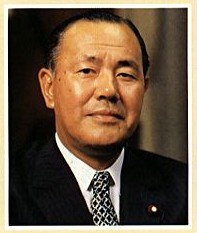
On 04/05/1918, Mr. Kakuei Tanaka 田中角栄, who has dedicated his life for Japanese political development and advocated the base ideology of Japanese Liberal-Naitonalism, descended to the earth. With welcoming his birth day, this document is dedicated to show respect for Kakuei Tanaka and reminds his achievements. His great talent as the Japanese prime minister contributed to enable Japan to be diplomatically independent as a true sovereign state. Moreover, his project called "the Plan to Remodel the Japanese archipelago 日本列島改造計画" stimulated Japanese rapid economic growth thanks to his rare innate talent not only as a politician but also as a capitalist/entrepreneur. I am firmly proud of the part of Japanese history in which Mr. Kakuei Tanaka existed.
Mr Tanaka is the charismatic figure for majority of Keynesian economists (the group of economists supporting to preserve market economy (capitalist system) while putting emphasis on controlling the business cycle with the positive interventions by government as a mediator of the market into economic activity. In the contemporary period the prime minister Tanaka and his policy were inevitably required for Japanese economic growth which was quite immature for the foundation of economic growth so then needed to form the sophisticated relation between government and market.
Mr. Tanaka was a revolutionary figure in Japanese politics who challenged against the traditional incompetent characteristics of "politicians" as authoritarian figures. He was successful because he combined his talent as an entrepreneur and as an politician together. Entrepreneurs (Capitalists) are good at planning for capital development and optimising resource usage while being trained in various business competitions and acquiring trusts from individuals. By contrast, politicians can only secure their job security by means of relying on extracting taxation which is collected from individuals with their authoritarian enforcement. Following this fact entrepreneurs seem to be much productive and better at self-management. But if politicians are always under the pressure to accomplish their job and are obliged to obtain trusts from individuals without an authoritarian collective force, they may become responsible to contribute and compete under the pressure as similar to entrepreneurs.
Meanwhile entrepreneurs naturally get involved in competition and enforced to accomplish their duties, politicians can be spoiled and make the environment less competitive in the occupation secured by their esteem. They collect their profits from a political theft called taxation, and it is not necessary to gain respects from individuals because these individual citizens have to pay tax involuntarily regardless of these tax contributors' satisfaction rate. Therefore, unlike entrepreneurs who always need to make an effort of attracting their customers by providing them with satisfying goods and services in order to gain profits. Especially in the immature democratic system like in Japan tends to remain such a fact. Amazingly, despite this tendency the former prime minister Kakuei Tanaka conducted his business pursuit established by Mr Tanaka himself to lead both private business and government body help each other so then laid the basis of Japanese economic growth.

Subscribe to:
Posts (Atom)