Showing posts with label anarchism. Show all posts

Thursday, July 30, 2026

AI synthetic Touhou fan-art: Youmu and Sanae standing against Tojiko, Futo, and Futo in Touhou 13 ~ Ten Desires - Tool: ChatGPT plus


Posted on my pixiv page: https://www.pixiv.net/en/artworks/147796476

YouTube: https://www.youtube.com/shorts/4Htb42KpQzk
NicoNico: https://www.nicovideo.jp/shorts/ss46607508

Lately, I’ve been busy with my main job and have no air conditioning in my room, making it hard to focus on creative work due to my primary research duties. Today, I scanned a rough sketch and finished it using a mix of AI tools. I also made this as an example of creating free AI art with ChatGPT. 

The prompt grew iteratively. Each unsuccessful generation revealed another ambiguity, so I kept adding more precise constraints until the result came close to the composition in my mind. In that sense, the final prompt is almost an archaeological record of my negotiations with the model.

The image is not only my idealised vision of Touhou Project, but also my own philosophical allegory. The three figures above represent hereditary, ritualised authority and the power of tradition. Sanae, as a modern progressive arriving from the twenty-first century, and Youmu, imagined as a solitary and disciplined swordswoman, confront them from below. Together, the two heroines represent different aspects of the player—essentially, different aspects of myself.

The input prompts are as follows: 

Monday, August 01, 2022

... Japan 日本 !

I have been criticising Japan since the beginning of this site establishment. This criticism of Japan is based on both the objective social scientific analyses as well as the subjective perspective based on my own life experiences. However, I have recently realised that the characteristics of Japan strongly and repeatedly accused seem to be originated from the political establishment explained in the recorded history. 

The Tenno regime has formed the totalitarian characteristics. This has based the highly stratified social structure transforming the majority citizens' personality to be subservient to their authority. The intensively cohesive social norms and values are definitely the derivatives of this stratified social structure. 

Even during the Shogunate periods from the 12th to the 19th century, this cohesive social structure thrived despite the relatively weaker influence of the aristocratic central authority. Yet, the subservient personality of the Japanese mass was hardly discouraged so that their loyalty to any authority was strong regardless of Tenno or Shogun. Perhaps, this unchangeable subservient personality was derived from the Japanese geographical isolation in the world where the enlightenment from the outside hardly reached there. 

Since the 19th century, Japan has adopted the Western style modern governance and capitalist economy. Some elites Japanese have successfully been enlightened to become progressive thinkers attempting to transform Japan to the modern nation state deserving the majority citizens. Nevertheless, the underlying characteristics and personality of Japanese people subservient to their authority has never changed. 

Even though some enlightenment ideal has been introduced, the true enlightenment for emancipating majority Japanese individuals from their superstitious loyalty and servile personality has hey never been achieved. This is the fundamental cause of perpetuating the political and social corruption hurting the Japanese majority mass as a suicidal attitude of themselves. It seems to have required much more fundamentally drastic reform in Japan to enlighten them.

There has been criticism by the social anthropological theory of this socially pathological trait is rooted in the establishment stage of the authoritarian figure shown in the recorded history. The original Japanese civilisation identity was originally related to the Shintoist shamanism which followed the tranquil communitarian paganism promoting more egalitarian and mutualist social norms and values.

There is certainly an attractive element in Japan and Japanese humans and their civilisation which has been retained since the prehistorical period. The prehistorical ancient Shintoist shamanism and pagan practices had brought up Japanese individuals as highly spirited enough to compassionately cohabit with neighbouring individuals and natural environments. Their virtuous characteristics such as diligence and humbleness must have been born out of this period. 

The authoritarian establishment introduced in the early historical record destroyed that prehistorical sacred pagan Japan. The social anthropological theory claims that the peaceful pagan tradition of the Japanese civilisation has been hijacked by the authoritarian oppressors. The subservient personality of the Japanese mass must be formed by that oppressive structuralist regime forcing the excess centralisation of politics and the unconditional subservience of the Japanese mass to these oppressive rulers. 

The Japanese indigenous individuals were conquered by the few numbers of arrogant nobles heavily influenced by the oppressive authoritarian totalitarianism. These oppressors hijacked Shinto by replacing the original peaceful egalitarian paganism with the oppressive authoritarian counterpart. Its indoctrination has imprinted the servile and intolerant personality into the Japanese mass. 

In order to overcome from the current distressful social crises, it is the time for Japan and Japanese to reincarnate the sacred spiritual prehistorical Japan! It is not worth to give up this attempt to fight back against the oppressive status-quo exploiting individuals with the millennium long indoctrination!


Sunday, July 31, 2022

The alternative required for replacing the current dysfunctional world socioeconomics

The current entire world is a full of mess. This should be no longer called the functional order.  This is the disorder perpetuating various social diseases and social exclusion of majority individuals.  In terms of economic, political, and sociological perspectives, this world socioeconomic situation is undoubtedly dysfunctional enough to need an alternative replacing the current socioeconomic structure. Please kindly read the linked articles:

Economic issues:

Domination by Corporatism,The New Totalitarian

http://art-blue-liberalism.blogspot.com/2017/04/domination-by-corporatismthe-new.html

Monopoly of Corporatism Expands in Present Day Capitalism: Average Cost shifts Rightward

http://art-blue-liberalism.blogspot.com/2018/03/monopoly-of-corporatism-expands-in.html 

Let's be sceptical about Corporate Capitalism!

http://art-blue-liberalism.blogspot.com/2022/06/lets-revolt-against-corporate-capitalism.html

The current market economy is monopolised by the elite corporate tycoons. Even though the status-quo claims for the equality of opportunity to compete under meritocratic ethics, the income distribution mechanism has already become too asymmetric to merely rely on the labour market competition. Therefore, some degree of the equality of outcome for all the individual is required to accomplish the equality of opportunity more than ever.

Political issues:

Democracy of the modern world under challenge

http://art-blue-liberalism.blogspot.com/2022/07/democracy-of-modern-world-under.html

The Good Communism: Anarch-Syndicalism

http://art-blue-liberalism.blogspot.com/2022/07/the-good-communism-anarch-syndicalism.html

The Japanese Anarchist Communism

http://art-blue-liberalism.blogspot.com/2022/07/the-japanese-anarchist-communism.html

Crypto currencies based on the Block-chain technology e.g., BItcoin and the P2P networking are like Stirnerism in economy and finance!
http://art-blue-liberalism.blogspot.com/2022/06/crypto-currencies-based-on-block-chain.html


The decision making process is centralised more than ever. The nation state government no longer deserve their individual citizens. Not only the authoritarian political structure but also the counterpart called the Liberal-Democracy put priority on the interests of the few number of the politically powerful peers not allowing to reflect the opinion of the majority individuals.  By referring to the P2P (Peer To Peer) system, it might be far more effective to install the spontaneous order based on the multiple interactions of individuals without any centralised structure. The spirit of the participation will encourage these autonomous individuals to voluntarily improve their living standard by taking advantage of the remarkably developed information technology. 

Social issues:

Suicide and Community

http://art-blue-liberalism.blogspot.com/2021/11/suicide-and-community.html

Tolerating Uselessness

http://art-blue-liberalism.blogspot.com/2022/05/tolerating-uselessness.html

Manifesto Spiritual Libertarian - the Libertarian for the coming age of Ying 陰

http://art-blue-liberalism.blogspot.com/2022/06/manifesto-spiritual-libertarian.html

The polarisation between the ruling class and the useless class rises in the society of the entire world. Those who are not "conforming" of producing the enough productivity fulfilling the interests of the ruling class are often socially excluded. As the factors of production demand individuals with conforming skills and talents more and more, more individuals tend to be labelled as "useless". so that their meaning of living is taken away and eventually falling into the state of the Anomie (normlessness). It is the time to rebel against the fixed norms and values imposed by the ruling class to emancipate individuals and their spirit to imagine and eventually form the new alternative liberating the autonomous individuals!

Tuesday, July 12, 2022

The Japanese Anarchist Communism

The current world socioeconomic situation is still gloomy. In particular, the socioeconomic situation of Japan is indeed depressing. On the top of the multiple decades of the income growth stagnation, the current stagflation (output stagnation + price inflation) perpetuated by the Japanese Yen (JPY) depreciation in the foreign currency exchange deteriorates individual citizens' daily life. The growing mental illness issues as well as the rising suicide rate are worrying as the sign of the moral and social crisis. Is it the problem of Japan itself? Or is it different from how Japan originally was? In the past, there was a political theory introduced as the antithesis of adopting the modern Western industrialisation and materialist ethics to Japan. So, let's evaluate.

In Japan, there were some politicians who were advocated to Anarchist Communist before the World War 2 (WW2). Even though this policy was not put into practice in real, this political movement was influential to the various contemporary rebellious political factions against the contemporary Western capitalist imperialism. This influence is non-negligible for explaining the spiritualism of the contemporary status quo Touseiha administration during the WW2 despite their different political characteristics.

A former Japanese government bureaucrat 柳田国男 (Kunio Yanagida) was inspired by an Anarchist Communist philosopher Kropotkin whereas he was a strong Japanese nationalist at the same time. Yanagida had a unique attitude towards the issue of the Japanese monarchy Tenno system. He attempted to restore the pre-modern traditional Tenno system linked to the original Shinto shamanism while criticising the current modern monarchism strongly tied up with the modern nation state and its modern state capitalism. His own plan was to establish an Anarchist Communist state of Japan based on the decentralised pastoralist environment where all the autonomous individual habitants mutually cohabit together with their own free will.

Yanagida was sceptical about adopting the modernisation to Japan because its nation state and capitalism seemed to have deteriorated Japan and her citizens despite its promise for improving their lifestyle with the materialistic development. The modern nation state capitalism not only prioritise those elites living in the top structure but also discourages the voluntary contributions of individuals and their community aiding individuals together. The free trade which the modern capitalism insists on interrupts an autocratic individual living in their own unique lifestyle by imposing the instant materialist seduction. This seduction to the instant materialistic pleasure has undermined the peaceful pastoralist environment providing individual habitants with the humble but well-secured lifestyle.

The theory of Gaia explains that the centre pole of the world energy flow has already been shifting from London, the U.K. to Awaji Island, Japan (Known as the sacred birthplace of Japanese civilisation blessed by the divine pair of Izanami, the Goddess of creation, and Izanagi, the God of creation, in Shinto mythology). This implies that the political and spiritual domination is shifting from Anglo-Saxon regime to Japanese counterpart. Majority spiritualists describe that this is the drastic shift from the materialistic masculine 陽 (Yang) element to the spiritualist feminine 陰 (Ying) element. This may induce the decay of the modern industrialist characteristic of the modern Japan as well as the reincarnation of the mystic shamanistic matriarchy of the ancient Shinto-ist Japan.


By means of understanding this theory of Gaia, it can be worth off to re-evaluate the Anarchist Communism explained by Yanagida. The material prosperity will be lost furthermore due to Japan's further insolation from the global economic network caused by Japan's loss of its economic initiative. On the other hand, Japan will start focusing more on the non-material beings such as the local community network and the spiritual well beings. The interesting factor nowadays is that the number of Japanese citizens practising some spiritual rituals as their daily habit such as chanting mantra and playing Yoga is increasing. This phenomenon seems to gradually initiate the spiritualist pastoralism introduced by Yanagida.

The totalitarian state communism based on the nation state statism backed up by the orthodox Marxism is an obsolete rebellion countering the modern industrialism and the capitalist ideology. The orthodox Marxism contains an intensive Yang element which is the cohesive paternalistic autocracy inducing a high risk of provoking a war and other excess conflicts. Therefore, this intensive Yang characteristic will not be accepted by the world shifting to more Ying characteristics.

The idea of Communism should not be monopolised by the orthodox Marxists; There is a variety of Communism which actually challenges against the orthodox Marxian style and is compatible with Liberalism. There have been various new political philosophical movements of challenging the combination of capitalism and modern nation state government. Michel Foucault was a remarkable philosopher accusing the oppressive characteristics of the entire modernity. 

Foucault's philosophy is often criticised as an anachronistic because he seemed to romanticise the pre-modern feudalist society to a certain extend. Yet, his theory clarifies how the emerging modernity with its nation state and capitalism has deteriorated individuality of autonomous individuals by forcing the conformity to the ruling class interests and the entire monstrous mechanism of the modern nation state. His idea was to respect each unique characteristic of individuals not undermined by an institutionalised socioeconomic structure, and his policy is often introduced as the postmodern Anarch-Syndicalism. 

Perhaps, this postmodern Anarchist Communism introduced by Michel Foucault might emerge in the future Japan when the aforementioned energy power pole-shift from the Anglo-Saxon Yang to the Japanese Ying is completed. It will be the ideology combination of Foucault and Yanagida to establish a postmodern mutualist socio-economy if it is realised. This will be a synthesis of the pastoral communitarian cooperative virtue and the postmodern individualistic enlightenment challenging against the paternalistic authoritarianism of the modern nation state and capitalism. 

All in all, if Communism rises to counter Capitalism, this might be predicted to be in Japan by referring to both the political science and the theory of Gaia. Perhaps, the current suffering of Japan might be the birth-pang for transforming the current modern nation state capitalist Japan into the new alternative such as this pastoral mutual cooperative state of Anarchist Communist kind.

Monday, July 11, 2022

The Good Communism: Anarch-Syndicalism

The word Communism tends to be often prejudicially quoted as a synonym of authoritarianism/totalitarianism based on a nation state government administration. The authoritarian characteristics of the orthodox Marxian doctrine often represents the socialism aspiring to evolve to communism eventually. Then, the word communism is often seen as the enemy of Liberalism promoting individuals' liberty and autonomic right. However, there is another form of communism defying the existence of one single state authority commanding economy, the means of resource distribution, and society (the interaction of individual citizens), which is compatible with Liberalism. 


The United Soviet Socialist Republic (USSR) was the former suzerain nation of the socialist nations following the orthodox Marxist doctrine advocating for the socioeconomic evolution towards communism. The USSR no longer exists while there are still remaining remnants of the nations which still retain the Soviet style socialism. These remnants are controversial because many of them seem to have abandoned their original political principle. Furthermore, the main point of this essay is to affirm that the orthodox Marxism is not only the political philosophy supporting communism.

Some Asian socialist states ruled by a Communist/Marxian-socialist party seem to have diverted from the direction of their original communist ideal. They have actually adopted the intense capitalist practices while they self-proclaim to maintain their Marxist principle as their excuse to prop up their one-party dictatorship. Therefore, their characteristics are actually opposing to the communist ideal aspiring for the egalitarian socioeconomic state.

Cuba might be only one socialist nation maintaining the orthodox Marxian style communism in a legitimate way. It still keeps the state ownership based economy as well as the diverse distribution of resources securing their reasonable standard of living. At the same time, Cuban government implements the Soviet style autocratic paternalism to cohesively unify her individual citizens under the oppressive one-party authoritarianism suppressing individual liberty. This is the factor that the orthodox Marxism is not compatible with Liberalism.


By contrast, there is another form of communism called Anarch-Syndicalism  which aspires to establish the egalitarian socio-economy without an autocratic paternalism such as the orthodox Marxian proletariat dictatorship. Its economy and political administration are run by cooperative unions of individuals which are spontaneously formed by individuals' voluntary cooperation without a cohesive force of any authoritarian organisation. Therefore, it relies on each autonomic individual citizen to manage their own political administration with their free will free from authoritarian oppressions. 

This is a anarchist political philosophy defying the existence of nation state government, the cohesive institutionalised authoritarian organisation. This is a radical socialist political philosophy defying not only the oligarchy by the capitalist class elites manipulating socio-economy but also the monetary market economy demanding an intense conformity for all individual citizens as the means of production. This is a libertarian political philosophy promoting equal treatments to all individuals regardless of their gender, ethnic, and physical characteristic origins inside this mutualist community avoiding any stratified institutional administration. 


Anarch-Syndicalism is perhaps only one anarchism having been practised in real through the history. The Second Spanish Republic centred in Catalonia in the early 20th century was the innovative state adopting the Anarch-Syndicalist system for economy as well as political administration. Even though it lost the Spanish civil war then, it can be said to be reasonably successful enough to maintain the state under such an administration sufficient enough to continue fighting back. 

Their participatory economy, where various business decision-making processes of one firm are democratically managed by its trade union members, was successful enough to maintain the productivity required to fight against their opposing force. Because their profit was returned to each individual worker participating their production, the motivation of their daily business activities as well as their contribution to the entire commune was high enough to fight back against their opposing force. This can be compared to the direct democratic state of the ancient Athens where individual citizens were so proud of themselves as its non-expendable core-members of their state that they had such a strong voluntary spirit to keep fighting in a war.


In Japan, there were some politicians who were advocated to Anarch-Syndicalism before the World War 2 (WW2). Even though this policy was not put into practice in real, this political movement was influential to the various contemporary rebellious political factions against the contemporary Western capitalist imperialism. This influence is non-negligible for explaining the spiritualism of the contemporary status quo Touseiha administration during the WW2 despite their different political characteristics.

A former Japanese government bureaucrat Kunio Yanagida was inspired by an anarchist communist philosopher Kropotkin whereas he was a strong Japanese nationalist at the same time. Mr. Yanagida had a unique attitude towards the issue of the Japanese monarchy Tenno system. He attempted to restore the pre-modern traditional Tenno system linked to the original Shinto shamanism while criticising the current modern monarchism strongly tied up with the modern nation state and its modern state capitalism. His own plan was to establish an Anarch-Syndicalist state of Japan based on the decentralised pastoralist environment where all the autonomous individual habitants mutually cohabit together with their own free will.


The idea of Communism should not be monopolised by the orthodox Marxists; There is a variety of Communism which actually challenges against the orthodox Marxian style and is compatible with Liberalism. There have been various new political philosophical movements of challenging the combination of capitalism and modern nation state government. Michel Foucault was a remarkable philosopher accusing the oppressive characteristics of the entire modernity. 

Foucault's philosophy is often criticised as an anachronistic because he seemed to romanticise the pre-modern feudalist society to a certain extend. Yet, his theory clarifies how the emerging modernity with its nation state and capitalism has deteriorated individuality of autonomous individuals by forcing the conformity to the ruling class interests and the entire monstrous mechanism of the modern nation state. His idea was to respect each unique characteristic of individuals not undermined by an institutionalised socioeconomic structure, and his policy is often introduced as the postmodern Anarch-Syndicalism. 


In conclusion, Communism itself is not a bad idea as long as its form is compatible with Liberalism such as Anarch-Syndicalism. For the time being, capitalism with its monetary based market economy prevails as a popular socio-economy. Nevertheless, it is always worth off to brainstorm to evaluate any other future socio-economic alternative. Hence, Anarch-Syndicalism as a good form of Communism can be a good candidate.

Sunday, July 10, 2022

Democracy of the modern world under challenge

 "Liberal Democracy V.S. Authoritarian" is a hotly debated topic especially while China and Russia involving their peer alliance non-democratic nations intensively interfere in various foreign affairs nowadays. In the meantime, both the words "Democracy" and "Liberal" are frankly quoted as the counterpart nations of these authoritarian nations ruled by an iron fist of one party or any other autocratic figure. Therefore, it is suspicious to define whether or not these so-called Liberal Democratic nations are truly liberal as well as democratic as what these original words' definition implies.

The point to be critically evaluated here is that almost all those nations are administrated under indirect democracy which selects the limited number of representatives controlling over the political affairs. Perhaps, Switzerland might be only the democratic nation involving the majority citizens actively participating in their political affairs nowadays. Politics of the other "democratic" nations is handled by the chosen elites called politicians self-proclaiming to represent the majority citizens. However, it is often questionable to define as truly representing the majority individual citizens. 

Technically, these citizens are entitled to cast their vote to select these politicians as their representatives. Nevertheless, in reality, indirect democracy hardly represents the majority citizens. In particular, those with the constituency based electoral system seldom represents their majority citizens proportional to their population. Even by adopting the proportional representation to their electoral system, it is still difficult to satisfy elected politicians proportionally representing the citizens. Politicians may manipulate their fellow citizens for their own favour rather than what these citizens really need and want. Politicians often form their factional group which selects opinions matching with this group interest while excluding each individual's own will. 

At the same time, it is also critical to evaluate that democracy does not always imply fulfilling individual liberty. There is a risk that some institutionalised citizens from their own peer group to marginalise the other individual citizens for their favour propped up by their peer pressure as same as the aforementioned politicians. In order to secure liberty for each autonomous individual's sovereign, it may require an invincible ethical principle promoting their decision-making process as a guideline while enabling politics to represent their opinion. This sounds like a religion, but this should be the morally neutral principle not favouring any particular religious organisation. 

The modern complex institutional structure demands the centralised bureaucracy requiring the elites highly trained with a complex skill as well as the friendly connection and apprenticeship with the elders of this established structure to administrate the entire politics. Therefore, this inevitably needs to select those specialising in political organisational skills and connections with their factional peer groups whereas the rest majority are often ostracised from these influential peer groups. The true nature of the modern indirect democracy is much closer to that aristocracy or oligarchy rather than what democracy really means. All in all, the modern indirect democracy tends to be diverting from what both democracy and liberalism attempt to accomplish.

Nowadays, instead of relying on the centralised political organisation such as nation state government, it will be more efficient to adopt a decentralised administration system propped up with the spontaneous interferences among individuals as as the peer-to-peer (P2P) system. Due to the current remarkable information technological (IT) development, it is more possible to organise the decision-making process at each non-scheduled scattered time period than the past relying on the congregations of representatives gathered at a scheduled time. It is really questionable to insist on the need of replying on the representation by politicians and bureaucrats nowadays. 

Both (the modern indirect) democracy and authoritarian can be obsolete already. Each individual will be able to directly reflect their opinion over the networks of where they want to reflect it upon The furthermore developed IT will help sorting out individuals' opinions and efficiently optimising resource-distribution plans. It will even no longer require a political congregation of direct democracy seen in the ancient Athens because each political decision-making is processed at each spontaneous time, place, and occasion by means of its need and want. This new ideal is a combination of anarchism by individuals and technocracy by the IT resources. 

The new alternative to religion will emerge to fulfil the ideal of liberalising each individual in the world. As all the individuals are connected to each other across the borders more than ever, their spontaneous interactions will bring up the shared objectives and guidelines not bound to their distinctive traditional religious, ethical, and social norms and values. As Aristotle said, human being are naturally social, the naturally derived spontaneous interactions of human individuals will induce them to voluntarily create their own minimum required guidelines and rules necessary to prevent them from unnecessary conflicts and miscommunications. Then, even without a paternalistic intervention, they will find their own optimum method of forming consensus through their own try and error. 

Sum up, describing the modern indirect democratic nations as "Liberal Democratic" is questionable. These indirect democratic nations are not quite identical to the true characteristic of what the word "Liberal Democracy" should be derived from. The border splitting individuals out itself is already an obsolete element disrupting the true liberal democracy spontaneously formed among individuals. Hence, the dispute over "Liberal Democracy" and authoritarian is not essential to consider accomplishing the true ideal of liberal democracy in general.


Wednesday, June 15, 2022

Libertarian, the metaphysical radical


Libertarianism is well known political philosophy promoting the high degree of freedom in both the economic scale and the social scale of the Political Compass. In another word, Libertarian is known to be the economic right wing and the social left wing. While Libertarian reveals a remarkably unique characteristic in terms of politics, it also takes a notable position in terms of the philosophical spectrum. Libertarian perspective of the subject of philosophy called metaphysics is in an extreme side of its spectrum.

Metaphysics focuses on how and why the world is constructed and structured as well as how human individuals' actions and minds take place, are influenced by, and affect the others and the world. The spectrum of the metaphysical perspectives is spread between the determinism and its opposition. 

The extreme side of the determinism regards that individuals' mind and their action derived from it are purely dependent on the outside influences. Therefore, there is only one world so that there is no such a thing as a parallel world while the fate determines how the world and individuals living there. In such a view, the free will of individuals is irrelevant to exist because their mind and actions derived from it are simply determined by means of the complex flow of the world and its fate. 

Most of the philosophical perspectives accept there is some degree of freedom from the determined factors, which allows to change the predetermined outcomes to a certain extend within restriction imposed by fates and inevitability. Despite many inevitable factors determining their minds and actions limiting individuals' free will over their life and surrounding environment, there are still non-determined factors available to change with their will. 

Even politically radical theories stand on somewhere between these two sides of the metaphysical perspective. The notable materialist political philosophy Marxism describes that individuals' minds and actions are predetermined by means of the historical inevitability even though it highlights the emerging will of the proletariat class individuals. Owing to this theory, individuals' minds and actions are not quite derived from individuals' free will. These individuals will of changing their living condition is derived from their material needs and wants, which have been suppressed through the history, rather than the proactive free will. 

On the other hand, Libertarianism defies this materialist view because it regards highly of the free will of autonomous individuals which stimulates individuals' minds and actions instead of their frustrated material needs and wants.  It also explains that their free will is detached from the influence of either their material conditions or the externally derived factors. By means of its theory (regardless of its feasibility in real), the will of all individuals is free and independent from their material as well as externally influences. Therefore, each individual has her/his own influencing power over their life, their surrounding environment, and their destiny.

Libertarians also challenges another materialist theory called Capitalism although they are often categorised into the identical political spectrum. The material Capitalism affirms that their self-proclaimed objective factors such as the market force derive individuals even though they are politically free. Under Capitalist philosophy, individuals are stimulated by the material profitability in the market force. 

By contrast, Libertarian claims for a freedom from such a materialist motive even if it may incur the loss for gaining something more than their instant materialist gain which they pursue for their own unique purpose. Libertarians cling to a freedom to live independently from not only the political cohesion but also from the market force if it does not deserve their will. 

Moreover, Libertarianism is radically spiritualistic despite its strong social and moral political principle. What Libertarians call the free will is nothing more than a spirit, the non-physical element forming individuals' characteristics, not highly dependent on their physical conditions or any outside materialistic influences. In an individual's mind is completely independent from the materialistic influence, there must be some non-physical element driving this individual. This is often called spirit in general.

As similar to religious/spiritual thinkers, Libertarians believe in and count on the power of  spirit which they call the free will, which may eventually enable them to alter the shape of their personal traits as well as their world environment.  However, there is a notable difference between Libertarianism and the majority religion/spiritualism. Libertarianism avoids agitating the mass individuals with a superstitious belief because it leaves a room for each individual to think of their own belief within their own mind. Furthermore, the distinctive spiritual thought of Libertarianism is that each individual spirit lives in each detached own spiritual universe so that it is totally different from a conformist type of spiritualism which many religions are based on. 

Libertarian word view describes that each parallel world universe exists per each autonomous individual's will so that the infinite number of the parallel worlds as the products of these free wills thus exists. Libertarian perspective insists on the extreme side opposed to the determinism. It explains that the world is the product of the complex interactions of actions and minds derived from the free wills of individuals.  In another word, the unlimited number of the parallel world exist due to the  complex entanglements of the multiple interactions of the free wills. 

All in all, considering the Libertarian perspective, Libertarian distinctively rejects any theory describing individuals will is reactive to the deterministic forces. In reality, majority of Libertarians tend to compromisingly admit that there are still various obstacles preventing individuals' will from fully controlling themselves and their surroundings such as their naturally limited capability and compatibility as well as unpredictable spontaneously occurring events. 

Nevertheless, they still keep the radical metaphysical view, fundamentally regarding highly of the power of each individual free will, as their fundamental principle of their philosophical thought.   Their fundamentalist perspective is radically opposed to the metaphysically determinism so that Libertarianism certainly stands on the edge of the metaphysical perspective spectrum. 

Hence, Libertarians are perhaps the most metaphysically radical thinkers among all the philosophers when it comes to metaphysics.


Sunday, June 05, 2022

Crypto currencies based on the Block-chain technology e.g., BItcoin and the P2P networking are like Stirnerism in economy and finance!


The crypto-currencies are recognised as a double-edged blade for economy; it will stimulate economy with its innovative force whereas it also disturbs economy by challenging the already established stable system.  A famous astrologist has warned that these crypto-currencies will face a huge catastrophic shock in their market. 

It might be called an anarchist revolution in the world economic and financial systems. In particular, Stirnerism can be explained as the blockchain P2P network like Bitcoin. 


Frankly speaking, Stirnerist socio-political structure can be compared to the network of the blockchain like the one used in the cryptocurrencies such as Bitcoin.  This network system does not have any central server monitoring the entire system as a control tower.  

Instead, each individual computer calculates and verifies the interactions and actions among the community utilising this network system.  This is called the peer to peer (P2P) network where their application architecture is distributed among these individual computers.  These individual computers participate in their tasks and workloads as the peers.  The privilege and the equipment are equally distributed among these peers, and there is no authorities overriding their rules of activities. 

Like this P2P network, Stirnerian socioeconomic model requires the high competency level of all individuals participating in its socioeconomics. Like the P2P computer network system, all the participants must have a reasonably high specification level to cooperatively sustain the entire network structure. Each individual must be knowledgeable about the fair judgement and aware of their self-responsibility of contributing to their public goods and services (I.e., the free ride must be prevented with the best effort).  


The P2P network system of both the blockchain and Stirnerism face the identical characteristics of their challenges. This P2P system still need to tackle issues of managing of data serving and access authentication.  Establishing an centralised system is efficient to store and serve the collectively used data, services, and public goods because maintenance can be concentrated on the limited places.  By contrast, the P2P network requires all agents to share the same responsibility of maintaining, managing, and updating their quality of what required to prop up this whole entire system.  


In the past when the information technology is not developed as much as nowadays, there has no civilisation having succeeded in establishing such an individualist mutualist anarchist society like Stirnerism even for a short time period.  This is simply because it was unimaginable.  By contrast, Stirnerism has become imaginable to establish to the certain extend by comparing the socio-politics with the hard scientific technology since the introduction of the blockchain and its P2P network. 

There is an expectation that engineers and scientists develop the current P2P network system to transform it to the more efficient and manageable alternative. This innovation expected in the future will be beneficial to continue this currently ongoing revolution of decentralising the structure of both the information technologies and political science.

Saturday, May 28, 2022

Stirnerism: The most theoretically completed but the least feasible political philosophy


Max Stirner is a political philosopher who invented the idea and the logical construction of individualistic anarchism. This essay comprehensively refers to his political philosophy as Stirnerism. Stirnerism is a unique theory which challenges not only the other non-anarchist political theories but also all the existing anarchist theories. At the same time, Stirnerism seems to be the most theoretically completed but the least feasible political philosophy to implement in real.

In terms of the mainstream political analyses, the establishment of anarchist state falls into either the communism rejecting the private property right and the monetary economy or the survivalist capitalism where none provides the re-distribution of the wealth even when the monopoly oppresses the mass. By means of the feasible policy implementation, it is more likely to end up with resulting in such a state. Stirnerism attempting both protecting the private property right and preventing the wealth monopoly by few.

Stirnerism claims for relinquishing not only the hereditary monarchy and aristocracy but also the nation state itself as well as the entire legal system propping up it. This is the characteristics shared with the other forms of anarchism.  In contrast to other forms of anarchism, Stirnerism distinguishes itself from the contemporary anarchism by insisting on preserving the private property right for each individual and the market economy as a form of their freedom of exchange and choice. It appears each individual's own right to materially deserve her/himself and their own natural desire and own freedom of choice as one of its fundamental principles. Stirnerism regards that the existence of nation state government hinders individual freedom and right instead of protecting them.

 Stirnerism also claims for preventing the monopoly by few hijacking the pure free market economy to protect majority individuals' right to enjoy their freedom and right. In another word, it insists on discouraging another form of government, such as a monopolistic corporation and an organised criminal faction, monopolising both economy and society. This is what John Maynard Keynes thought of with the government positive intervention by reforming its governance instead of abolishing it. By means of economic and social policy, Stirnerism and Keynesian share the similar quality despite their complete characteristic difference. 

To accomplish these Stirnerist attempts, the existence of the cooperative which is sustained by each individual's voluntary contribution to a public administration. The efficient and fair administration of public goods and services will be the key to accomplish Stirnerian deal which is identical to Keynesian policy. Stirnerism replaces nation state government with an alternative operatable form of governance without a nation state, which is the spontaneously established cooperative by the voluntary union of individuals.

This problem which this public sector model based on the cooperative faces is that it requires the high competency level of all individuals participating in its socioeconomics. Like the P2P computer network system, all the participants must have a reasonably high specification level to cooperatively sustain the entire network structure. Each individual must be knowledgeable about the fair judgement and aware of their self-responsibility of contributing to their public goods and services (I.e., the free ride must be prevented with the best effort).  

Instead of one or few authorities commanding the majority to do what they have got to do in their daily life, the majority mass have a lot of responsibilities as an exchange for their freedom and right.  These mass individual must be enlightened enough to look after themselves and be knowledgable and responsible about forming a contract with the other individuals.  In another word, individuals have to be aware of themselves as social beings who are responsible enough to accomplish their social duty as their exchange for living there with their autonomic freedom and right. 

Overall, having taken these issues into consideration, Stirnerism sounds really ideal whilst it also sounds a lot of works to implement in real. More than the other political philosophical theories, it requires almost all individuals participating together to be enlightened enough to understand  and fulfil the required specification necessary for Stirnerian P2P style social contacts.  Perhaps, some future technological advancements may provide individuals with the solution to enable it to be feasible. Hence, it is still challenging to put Stirnerism into practice in real world even though it is still a very attractive as well as interesting theory worth considering for its implementation.

Sunday, December 19, 2021

My graphs of socio-economic policy created in 2004-05 found while searching my old albums


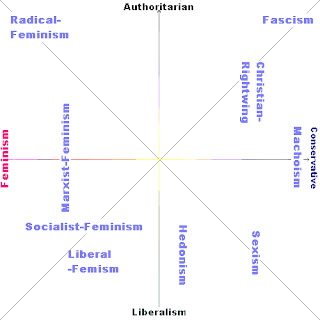
I created these graphs of socioeconomic policy when I just started studying in Scottish university.  Since communicating with my Anarch-socialist/communist friends in Edinburgh and the member of the student union in the university, I have started to realise that the multi-dimensional analysis is needed to analyse politics as well as economics and sociology.  The impression and the culture shock were so big that my artistic inspiration stimulated me to create such simple but impressive graphs at the time period even before I started this blog (from 2006). 


Sunday, June 13, 2021

Stirnerism can be explained as the blockchain P2P network like Bitcoin

> Is Stirner an anarchist?

There are some arguments claiming Max Stirner is not really an anarchist because his theory regards highly of some sorts of system orders without a unified autocracy and spontaneously determined contracts.  

What defining Stirner's socio-political theory (Stirnerism) as an anarchism is that it attempts to dismantle all the architecture of the modern bureaucratic system and monopoly of both government and huge private corporations.  Furthermore, it suggests, instead of managing public goods and services in the centralised authority, free individuals cooperate together when these public things are needed to manage under a naturally made contract.  

It can be somehow similar to the fundamental form of direct democracy where all the decisions are democratically determined by means of individuals' direct representation of voices.   Nevertheless, there is a fundamental difference with the political system of direct democracy and Stirnerism. The former still owns a congress or some form of the centrally controlled organisation monitoring the whole system.  By contrast, the latter is not supposed to have any central control tower of managing politics and social issues.

 In another word, Stirnerist anarchism is different from a radical anarchism disregarding the public managements and contract-forming.  It is quite difficult to explain what Stirnerism really is.  Nonetheless, thanks to the current notable development of the information technology, it has become easier to image what Stirnerism will be like nowadays.  

> Stirnerism is like the blockchain based on the P2P network 

Frankly speaking, Stirnerist socio-political structure can be compared to the network of the blockchain like the one used in the cryptocurrencies such as Bitcoin.  This network system does not have any central server monitoring the entire system as a control tower.  

Instead, each individual computer calculates and verifies the interactions and actions among the community utilising this network system.  This is called the peer to peer (P2P) network where their application architecture is distributed among these individual computers.  These individual computers participate in their tasks and workloads as the peers.  The privilege and the equipment are equally distributed among these peers, and there is no authorities overriding their rules of activities. 

This network architecture is what Stirnerism attempts to apply to the socio-politics of human individuals.  These individual humans are supposed to cooperate as the peers to share the tasks and the workload according to their needs and skills.  There is no unified central authority overriding their mutually formed peering connection. 


On the other hand, the P2P network system of both the blockchain and Stirnerism contains some fundamental problem.   This P2P system tends to be still inefficient when it comes to the management of data serving and access authentication.  

Establishing an centralised system is efficient to store and serve the collectively used data, services, and public goods because maintenance can be concentrated on the limited places.  By contrast, the P2P network requires all agents to share the same responsibility of maintaining, managing, and updating their quality of what required to prop up this whole entire system.  

This is why each transaction of Bitcoin still takes about at least 10 minutes.  In addition, organising human individuals in terms of the P2P network is far more extraordinarily challenging than setting up the computers. The setup for individuals cannot be flexibly adjusted as same as the artificial creations, and it is beyond our comprehension by means of the imaginablity of the current human civilisation. 


Yet, there is still a hope for accomplishing Stirnerist P2P public management.  At least, Stirnerism has become imaginable to establish to the certain extend by comparing the socio-politics with the hard scientific technology since the introduction of the blockchain and its P2P network. 

In the past when the information technology is not developed as much as nowadays, there has no civilisation having succeeded in establishing such an individualist mutualist anarchist society like Stirnerism even for a short time period.  This is simply because it was unimaginable.  

Some hints from the development of the hard science can be linked to developing soft-science and arts of politics, sociology, and economics in the future.  When a hard scientist discover some feasible solution of transforming the current P2P network system to the more efficient and manageable alternative, it will be beneficial for a soft scientist to innovate their own theory.


Wednesday, August 26, 2020

Happiness related to Monarchy, One Party, and Democracy

Published on 12/07/2012 12:57 British Summer Time


Jeremy Bentham created an algebraic formula demonstrating the sum of utility derived from how national political system is structured. The algebraic formula is as follows:


Increasing the weight on one branch of these three decreases the weight on the other two branches. Bentham argued that the current (Contemporary) British system balances the weights among these three branches at the feasible level to maximise the utility.

Nonetheless, Bentham also insisted on abolition of sovereign = monarchy or dictator when his/her existence starts reducing the sum of utility rather than increasing it, and then the revolution shall be emerged. The coefficients of these variable, their sign (+/-), and their significance vary across different time, place (culture and civilisation), and occasion (GDP growth, etc).


At the contemporary time period when Bentham was alive, there was little objective ways to measure the sum of individuals' happiness in each nation in the world. By contrast, due to the development of the information technology, we have become able to collect some peer assessed numerical indices of various social scientific data sets. This happiness index is also collected by objective view points and survey methods under an academic peer assessment. Thus, it is interesting to assess Benthamite calculus owing to this world happiness index.

The data showing how the political system is structured in each nation in the world is quoted from "The Independent Map of the world in 2005". The binary variables are used as the indices to show how one nation's politics is structured e.g. Absolute Monarchy, One Party system, or Indirect/Direct Democracy. There is only one change from the original Benthamite algebra, which is that Aristocracy implies the executive member of a national legislature. As Bentham mentioned Aristocrats were those who have wisdom to govern, so it is equivalent to the government and bureaucratic elites. (He mentioned the House of Lord whose member is not elected from citizens. So, as the members of the legislature is directly appointed by an authoritarian legislation not by individual citizens) Then, many countries governed by one party technocratic policy is seen to be a pure aristocratic system. Absolute monarchy is assumed not to have any influential technocratic institution i.e. aristocracy. (Saudi Arabia and Morocco) whereas the constitutional monarchist nations have an influential parliament (E.g. Arab Emirates). All indirect democratic countries hold both Aristocracy = Technocratic Legislature and Democracy. They are still democratic but not the pure direct democracy. Only the nation seen to be a pure direct democratic is Switzerland in this analysis. Thus, the binary variable representing Monarchy is zero, the binary variable representing Aristocracy is 1, and the binary variable representing Democracy is 1.


**************** An important note ****************

The binary variables are usually 0 or 1, but there are some exceptions.

-> All the British Commonwealth nations have the binary variable denoting "Monarchy" that is 0.3 instead of either 0 or 1. These nations technically have a monarchy but s/he is not their own monarchy living in their countries, and his/her influence is not that strong as much as those nations having their own monarchy like Britain and Japan.

-> The "transient" democratic nations have the binary variable denoting "Democracy" that is 0.5 instead of either 0 or 1. It is still democratic but not a stable democracy. So, the effect of the variable "Democracy" is considered to be marginal.

**************** ***************** ****************

In addition, the Happy Planet Index (HPI) used as the dependent variable in this regression analysis is highly affected by the "natural climate" in these nations. Some nations in a certain latitude mark a significantly higher HPI than the others. Therefore, the absolute value of nation's latitude and its squared value, as the exogenous explanatory variables, are regressed on the HPI as same as the previously mentioned binary variables. The reason why the binomial function of Latitude, instead of a single variable (The linear function), is to demonstrate the parabolic function. The linear model (Regressing only on |Latitude|) only express either the right middle of equator or the North pole and the South pole are the happiest place to live. But, the HPI certainly shows that the optimum latitude to maximise the happiness is somewhere not far away from equator but not the zero latitude point.

All in all, the formula for the regression analysis is as follows:

*** The dependent variable is the natural log of the Happiness Planet Index (HPI) ***


The binomial function showing the climate effect (Latitude) is "the absolute value of Latitude + The squared value of Latitude".

In addition, there are the three binary variables. There are three binary variables showing the pure effect. The first one describes the pure effect of Monarchy. The second one describes the pure effect of Aristocracy. Then, the third one describes the pure effect of democracy.

The rest of variables are the binary variable denoting the interactive effect by two or three variables together. The interaction effect by "Monarchy" and "Democracy" is not assessed because there is no country having both monarchy and democracy without an aristocracy=technocratic executive branch.


The coefficients and their significance is as follows:


The coefficients of the variables showing the climate effect are 0.02256 for the coefficient of the absolute value of Latitude and -0.0004 for the squared variable of the latitude. Then, the formula shapes an upward parabola shown in the picture below.


Therefore, the place where the latitude is either +31 or -31 maximises the happiness of people living.


All the three binary variables denoting the single effect have a significant and positive coefficient. Both the interaction of Monarchy and Aristocracy and the interaction of Aristocracy and Democracy have a significant and negative coefficient. The coefficient of the interaction of all three variables is non-significant, so that the half of the coefficient value is used. The HPI derived from each different political structure is as follows:


This is a bar graph showing the policy effect on the H.P.I.:


These trends can be roughly visualised in a picture graph like this:


A nation with the direct democracy (Monarchy = 0, Aristocracy = 0, Democracy = 1 ) produces the highest HIP. But, Switzerland is the only nation with such a system in the world. So, it is not sure if it is still significant number of the sample to prove its superiority.

The absolute monarchist nations, (Monarchy = 1, Aristocracy = 0, Democracy = 0 ) is the second best. But, there are only Saudi Arabia and Morocco as the examples. Furthermore, all the other monarchist nations without any democratic structure (Monarchy = 1, Aristocracy = 1, Democracy = 0 ) showed the lowest HPI. Thus, it can be seen that, in general, monarchism without any degree of democracy is more likely to cause unhappiness rather than happiness.

The nations with one party system mark the second lowest HPI. Even though these nations are more efficient to be stablised than those lowest developed nations, the transient democratic nations, and any non-democratic monarchist nations. Nonetheless, they seem to sacrifice happiness for their stability.


Some of the constitutional monarchist nations with democracy seem to be happier than democratic republic nations. But, majority of the constitutional monarchist nations are less happier than democratic republic nations.

The democratic republic nations, though their democracy is indirect, such as the United States of America and France are the happiest nations next to Switzerland, the direct democratic nation.


All in all, Democratic Republican nations at the latitude of 31 or -31 seem to be the happiest ones. It also looks like that we can try to establish another Direct Democratic country because it looks like maxminising the happiness of individuals in a nation. Nonetheless, only the sample is Switzerland and it is never known if the similar model is applicable to increase the happiness in another country in reality. The democratic republic nations perform well among all. The performance of the constitutional monarchist nations with an indirect democracy varies.

Hence, this econometric analysis seems to be able to assist Jeremy Bentham having argued that, if monarchy start causing disutility rather than utility, then it is time for revolution! Perhaps, we have never known that there will be a revolution for the cause of Direct Democracy, the unknown ideal, in the near future? The Direct Democracy seems to maximise individuals' happiness at the optimum level (Though there is not enough number of the sample to prove in reality) by means of this statistic inference.


* It was difficult to find if the model creates heteroscedasticity: Some tests said no, but the other said yes. But, this analysis was mainly composed of the binary variables, and the dependent variable used in this analysis is not a precisely scientifically accurate variable. So, the aim of test should not be strict as much as the other econometric analyses.


Wednesday, May 23, 2018

Madness and Civilisation by Michel Faucault


We had better read "Madness and Civilisation" by Michel Faucault. It explains how the modern "society" has started discriminating those who are seen handicapped and mentally challenging. Faucault sometimes romanticises the past way too much and overestimate communism as a solution. However, he provided a productive scepticism about unconditionally accepting development and modernisation without questioning and he criticised not only capitalism but also socialism both of which discourage liberty of individuals and their free self-expression.

Mad and handicapped individuals used to be more accepted in the past as just different. They were even sometimes treated as useful because they have a unique ability of challenging something beyond capacity or being able to perceive something not perceivable. They are integrated into their community with the rest majority, and they found their own virtue of being parts of humans' activities. There was not any specific definition of distinguishing individuals between normal and abnormal/disabled/mad, and they naturally accepted the difference of characteristics.

But, the modern "society" started labeling them as "non-conforming" as a product like a cogwheel. Faucault successfully pointed out that individuality is rather forfeited in this modern world although it often puts emphasis on individuality. Individuals are allowed to enjoy benefits from the modernity as long as they are approved as conforming as the "products" contributing to functioning the apparatus called the modernity. By contrast, those who are labelled as nonconforming are treated as useless and/or inferior.

Human individuals nowadays live in a more materially better off but more complex world. The modernisation has brought a lot of benefits and developed human-individuals' intelligence by inventing a big and complex function of modern society. On the other hand, the big complex nature of this society requires an intensive conformity straining individuals to adjust themselves and contribute to its function as the cogwheel mobilising this apparatus of modern society. After having achieved a development of modernity, it has come to the point where individuals had better learn from the inclusive characteristics of pre-modernity to compensate for the stressful strain of modern society while maintaining the benefits of modernity.

Saturday, November 25, 2017

Max Stirner: The Ultimate Liberalist


Humans have aspired to establish various forms of their ideal political state by adjusting to the contemporary situations at each different time period in order to fulfil their desire and wish. However, regardless of any kind of political ideology put into practice including feudalism, liberal-democracy, and socialism, there is always a single public authority holding the final decision making power stabilising the decision making processes which tend to be messed up under different conflicting interests among individuals. This single public authority has been required in order to maintain the consistency of a state's policy administration in order to avoid breaking down a state.

As long as any system attempts to defend their political principle and individual-citizens there demand someone to maintain the consistency of this system, the existence of the single authority, which is powerful enough to suppress any possible conflicts of interests destabilising this system, tends to emerge. Liberal-democracy requires the single public authority sustaining the system providing individual citizens with their equality in opportunity whereas socialism requires the single public authority in charge of re-distributing incomes and resources equally among individual citizens. However, the single authority holds an enough power enabling to violate the system to provide itself with the unfair advantage to have a far stronger opportunity to monopolise resources and the power of various decision-making processes.

Even after abolishing a government of a nation-state, the alternative powerful public authority come into the power in an anarchist-communist state because individual-citizens claimed for the unified principle of stabilising their state under the unified interest of communism. In order to administrate the income and resource distribution among all individual citizens, the altruism of all individual-citizens was heavily emphasised, and any deviation from their altruistic union was seen as an error. Then, it was an obligation for any individual to obtain the permission from the group of other individuals in order to act independently. The autocratic pressure derived from the interaction of from the group of individuals should be called society which is physically unobservable unlike a governmental institution but it certainly exists as the public authority holding the authority equivalent to what a government of a nation state holds. Then, as long as individuals aspire to cling to sustaining the consistency and the stability of their collective distribution and the universal political principle, any form of the single public authority tends to emerge all the time.


How is it possible to establish the world where all individuals act and think independently without any authoritarian suppression including both the physical source of nation-states' government and the nonphysical structure such as society. Adam Smith has already invented the policy accomplishing this ideal by means of the economic scale. Then, Smith's economic liberalism, which tends to be called either free-market or capitalism, has enabled this world to optimise their resource distribution and increase the aggregate productivity enabling individuals to obtain the high degree of freedom of enjoying their material satisfaction. Nevertheless, the decision-making process of politics and social-policy is still held by a single authority such as a nation-state government. Therefore, even though the aggregate productivity is maximised under the economic liberalism, the distribution of the resources is still asymmetric due to the existence of the single public authority. The reason why this asymmetry takes place is that this public authority is powerful enough to violate the entire economic and social system by means of their personal favouritism. This unfair favouritism naturally emerges because not all individuals serving as the members of this public authority are not altruistic enough to serve the rest individuals, and they are prone to their selfish interests.


Instead of not solving the problem caused by the frustration of majority individuals due to the monopolised political power by the single public authority such as government or society, is there any possibility of establishing the world enabling individuals to live their own life by acting and thinking themselves independently without the suppression by the single authority? There was a great political philosopher called Max Stirner who invented his political philosophical ideal describing the world ultimately liberating individuals from the suppression of a public authority.


First of all, Stirner was critical about both nation-state and government. God's threat in ancient times and monarch's dignity in medieval controlled individuals' mind to repress their free action and thinking in order to deserve the ruling class. Both nation-states' government and society control individuals' mind by promising their liberty and right by word. At the same time, they are not guaranteed to fulfil the promise meanwhile they are expected to fulfil the obligations to their obeying authority more than their rewards. The contract between individuals and their obeying public authority of the modern nation state is based on their belief in their modern nation state. They are made to believe they will be eventually rewarded for their contribution to their nation states' authority without ensuring their actual result of obtaining enough rewards for their sacrifice. Therefore, this belief in the modern nation state government and society is resemblance to the belief in God's threat taught by religion and in the charismatic dignity of monarchy.

Unlike the majority classical anarchists claiming for condemning ego and abolishing private property, Stirner put emphasis on honestly admitting individuals' ego and allowing individuals to own private property. The other classical anarchists insisted that ego and ownership of private property were the means of unfair inequality and the perpetuation of the oppressive authoritarian regime. By contrast, the unfair unequal distribution of various resources was caused by the oppressive authorities artificially creating the collective incentive of controlling the distribution follows. In addition, Stirner encouraged egoism as individuals' vital energy source of living and rewarding themselves for their efforts and self-love. The fundamental problem was that only a limited number of privileged individuals in the authority were able to maximise their ego under the status-quo whilst the rest majority individuals were frustrated from maximising their own ego.

It is sometimes misunderstood as a survivalist denying any public community where individuals can rest from competition and they can use public goods and services provided by it. However, Stirner also claimed for a necessary public community providing its public goods & services and mediating social-contracts among individuals, and he called it the union of individuals. This union is an alternative form of the public body providing public goods & services and social-contracts & order which government and society have provided individuals with. This union should not be permanent so that it should be spontaneously created and relinquished if necessary without being constrained by the interest of authoritarian status-quo.


Perhaps, Stirner's political philosophy is something like the world of Liberalism in a bigger scale than what Adam Smith established. He seemed to want to enabling not only goods and services which are physically observable but also something more abstract and unobservable forms such as forming community and social-contracts to freely exchanged and replaced with another form spontaneously. However, these abstract and unobservable forms are difficult to measure their exact exchangeable value so that there tend to be a conflict of opinions and understandings among individuals without a single powerful public authority holding the final decision making power.

Those who have overtaken or been influenced by Stirner have always aspired to continue seeking any possibility of establishing an individual anarchism possibly maximising individuals' liberty, and then continue fighting against those who undermine any attempt of establishing it. Many new inventions are born out of an idea, and an innovation cannot be born without any plan based on an idea. So, as long as their ideal plan is derived from a logical analysis based on a rational principle, there might be a possibility to put this plan into practice in a real as a real policy. This is indeed an ultimately tough challenge because of the difficulty of maintaining its stability and the abstract characteristic of measuring what they are going to exchange to sustain the order of this politics. Despite this troublesome nature, it is important to hold this political philosophy as their fundamental principle while challenging the authoritarian status-quo clinging to sustaining their monopolistic power.

Nation states' government and society were emphasised as the oppressive authority repressing the possible individual liberty at the contemporary time period when Stirner was alive. At the current time period, it is precisely possible that an alternative form of an authority constraining individuals' liberty with their own justification emerges. The form of this authority may be more abstract to explain and/or constraining individuals' liberty more implicitly than government and society. Therefore, individuals may need to be far more cautious to more sceptically analyse their own life situation in order to defend their own liberty. If individuals want to live their own life which they are fully satisfied with, the ultimate liberalist ideal which Stirner dreamed of is worth off to keep holding out for.