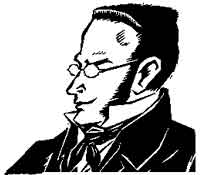
 “He who must expend his life to prolong life cannot enjoy it, and he who is still seeking for his life does not have it and can as little enjoy it.” --- Max Stirner (Anarchist)
Thursday, August 12, 2010
My favourite quote of Max Stirner
“He who must expend his life to prolong life cannot enjoy it, and he who is still seeking for his life does not have it and can as little enjoy it.” --- Max Stirner (Anarchist)


Japan will be far more isolated from the global community...!

Wednesday, Aug. 11, 2010
Budget cutters target JET
'Amakudari' excess or 23-year success in soft foreign policy?
Who want to go to Japan to friendly communicate with Japanese? Only those paid by them do! Any people from the advanced Western countries coming for business would not have much time to communicate in the local community.
This has been the only way the ordinary Western people (North American, Western European, Australian, and New Zealander) come to Japan, and Japanese could know their civilisation and culture! I was highly benefited by this JET programme! If there had not been this programme, I would not be successful like now! Japanese government should cut the other "Amakudari"; not the JET one!!
Friday, August 06, 2010
I rescpet Jean Claude Trichet
Although I am highly sceptical about the currently ongoing system of the European Monetary Union, I really respect Mr Trichet! This is the "good example of monetalism" i.e. not a nihilistic and normative monetalism: Trichetian monetalism is realistic and functional! I really think, among the advanced nations, the US Federal Researve and the European Central Bank are respectable central banks: I seriously despice the other central banks in the advanced countries such as Bank of Japan and Bank of England! All in all, Mr. Jean Claude Trichet is a great governer! He is from Nancy in the north east of France where I visited once and is famous for Art Nouveau and Jeanne d'Arc. This proves a civilised place nurtures and educates such a civilised person
Yep, as long as the EU is willing to amend the current unstable structure of the EMU, the Eurozone economy will develop further and take an initiative in the global economy.
I am totally apathetic about the ideological issue, but I strongly concern about how the newly invented common currency system and the evolution of European unionism go on in the future!
I would say, the Euro is short in the short term, but long in the long (probably and the midium) term!
Mr. Trichet had a right choice to keep a certain level of interest rate unlike BoJ and BoE having setting sizeably low! Furthermore, as the interest rate goes up (what Mr Trichet has done) , the demand of purchasing national debts goes up, and the positive inflation will be encouraged due to repressing unnecessary supply of capital and encouraging a strong capital fonded by the increased saving. As the positive inflation occurs, the nominal wage starts going up by wage burgaining because the price of goods and services eventually goes up so that people have to burgain for their income. But, as the export demand increases the employment won't decrease as the overall productivity goes up in this economic region by rise in the interest rate. Good courage!
Yep, as long as the EU is willing to amend the current unstable structure of the EMU, the Eurozone economy will develop further and take an initiative in the global economy.
I am totally apathetic about the ideological issue, but I strongly concern about how the newly invented common currency system and the evolution of European unionism go on in the future!
I would say, the Euro is short in the short term, but long in the long (probably and the midium) term!
Mr. Trichet had a right choice to keep a certain level of interest rate unlike BoJ and BoE having setting sizeably low! Furthermore, as the interest rate goes up (what Mr Trichet has done) , the demand of purchasing national debts goes up, and the positive inflation will be encouraged due to repressing unnecessary supply of capital and encouraging a strong capital fonded by the increased saving. As the positive inflation occurs, the nominal wage starts going up by wage burgaining because the price of goods and services eventually goes up so that people have to burgain for their income. But, as the export demand increases the employment won't decrease as the overall productivity goes up in this economic region by rise in the interest rate. Good courage!
Saturday, July 10, 2010
The 5 conditions to join the European Monetary Union

There are the 5 conditions:
1. High trade frequency with the Eurozone
2. Flexible Labour Mobility
3. Harmonised Business cycle with the Eurozone's
4. Sophisticated fiscal policy and a long history of the tight monetary policy
5. Political integration.
The score for the UK:
1. Tick!
2. Tick! But, conditional. The UK should stop the unfair welfair distribution system! The way to select the individuals to gain the benefit much more carefully...
3. No. The financial regulation system has to be more centralised and controlled by the mainland EU.
4. Not too bad compared to Mediterraneans.
5. Conditionally tick. Depends on how the USA reacts, and how the EU performs in the diplomacy. In addition, the nuclear issue is a big matter! The UK nuclear technology sharing must shift from with the USA to with France. All the nuclear plants should be owned by the EU gov't!
The biggest challenge for the UK to join the EMU is the question No. 3. The UK has a strong trade tie with outside the EU, and the UK industry has been sustained by her remarkably famous very liberalised financial market. It'll be a big challenge for the UK citizens to abandon their tradition as the centre of internationan financial market... In addition, the problem of the question No. 5 is France.
France has to abandon her nationalism! France has to make the nuclear technology shared with the EU gov't!
>I'd be keeping an eye on German politics. They are paying for the Greeks and others.
I think (and feel) the continental Europe will survive with the EMU. In fact, meanwhile the EMU needs to enforce transformation (It will be oppressive) to the European Federalism, the economy eventually will be stabilised and face an economic recovery in 2014.
Creation of the "Eurobond" is better than enforcing one country or a few countries to transfer their tax revenue.
If I were the EU governor, I would have made all the Eurozone countries to DEFAULT in order to abolish all the national debt of these member countries. Then, all the fiscal stimulus packages should be paid off by the "Eurobond" i.e. collective responsiblity among the all Eurozone countries. This way will give much better prospect for the economic growth inside the Eurozone so that the Golden Role will be encouraged. In this way, the Eurobond will be more popular to be purchased so that the EU finance will be much lucrative.
In addition, I wonder how the USA reacts, and how France is willing to share the nuclear issue with the UK.
* The advantange for the UK to join the EMU:
1. Becomes easier to establish a branch of Europe in the UK and of the UK in Europe.
2. Financial market is more integrated with the EMU countries so that the risk of shock in the financial market is shared among the EMU countries
3. If the Euro-bond is created (This is the final condition to support joining the EMU!), the UK will take an advantage of the credibility of the Euro and the Euro-bonds (Creating the common currency also requires the common bond i.e. abolishing the national debt system)
But, whereas there are various advantages, I am a wee bit still sceptical about this integration...
1. The power of trade unions need to be diminished (Which is good, but the wage bargaining power of labourer in the entire EMU needs to be 10% or below so that the riot of labourers may occur)
2. The fiscal policy should be dictated by the EU central gov't, and weaken the dicision making power of the national gov't (especially during the first step of the estabilishment: It can allow more decentralisation after the status-quo of the EU federation is stabilised)
3. Immigration law for non-EU skilled labour force will be much stricter than now so that I am wondering if """I""" may have a disadvantage :( (This is the statement the UKIP put emphasis on)
Why The United States, Europe, and Japan are heading toward deflation, a classic prolonger of crises. further?
If I were a governor of central bank in any of them, I would have "INCREASED" the interest rate rather than putting it down to the zero rate...! :(
We'd rather better "restrict" money supply to increase the value of currency and increase the interest rate to encourage the trade of national debts! The investment rate won't increase due to the liquidity trap anyway so that we'd rather better decrease the excess supply (of capital), i.e. cutting down the unnecessary supply in a Short run. In the middle run, as savers gain the interest rate, unnecessary enterprises will be closed down, some productive enterprises will put a prise rise so that labourers (mainly unions) will also start bargaining for their wage, etc in the middle run.
Speaking of national debts, we'd rather better increase the interest rate in order to stimulate the demand for buying debts as a traded equity. As the interest rate starts going up it means the price inflation of these bonds. As the inflation of commodity, i.e. national debts, people start buying them and trade each other. As the exuberance to buy a national debt is encouraged, the public fonding is coming into the gov't budget i.e. the Golden Role occurs.
Are the bunch of buggers working in these central banks and major financial institutions real elites? I often think I'm much superior to them? Ain't I insane to say that?? Oh, God...
>will be the biggest challenge to democracy since the Second World War.
As I said in my blog, according to Kondratieff, we are now in the "Winter" which will cause the huge mass destruction as same as WW2 and Spain-America War. Until reducing the excess supply of capital and discovery of a new techology and/or a new natural resource take place, the winter won't end.
>I really do not think governments will be able to take the people with them when it comes to reducing our respective deficits unless the private market fills the gap.
I always claim people that the IS-LM model fails! It is useful to demonstrate a plausible explanation to indicate how the monetary and fiscal policy work. However, this model isn't proven by any statistic analysis. As Prof. Paul Krungman said many economists say lie. The IS-LM model always encounters the simultaneous problem (impossible to predict the change by using explanatory variables because these explanatory variables are also influenced by the dependent variable) and depends on the "sensitivity" of variables e.g. interest rate, tax, etc. As a matter of fact, I should be called a radical government sceptic. Although I admire the analyses introduced by J.M. Keynes, the possitive planning always suffering from "sensitivity dependency", "effect lagging", "violation of equity", etc.
If I were a governor of central bank in any of them, I would have "INCREASED" the interest rate rather than putting it down to the zero rate...! :(
We'd rather better "restrict" money supply to increase the value of currency and increase the interest rate to encourage the trade of national debts! The investment rate won't increase due to the liquidity trap anyway so that we'd rather better decrease the excess supply (of capital), i.e. cutting down the unnecessary supply in a Short run. In the middle run, as savers gain the interest rate, unnecessary enterprises will be closed down, some productive enterprises will put a prise rise so that labourers (mainly unions) will also start bargaining for their wage, etc in the middle run.
Speaking of national debts, we'd rather better increase the interest rate in order to stimulate the demand for buying debts as a traded equity. As the interest rate starts going up it means the price inflation of these bonds. As the inflation of commodity, i.e. national debts, people start buying them and trade each other. As the exuberance to buy a national debt is encouraged, the public fonding is coming into the gov't budget i.e. the Golden Role occurs.
Are the bunch of buggers working in these central banks and major financial institutions real elites? I often think I'm much superior to them? Ain't I insane to say that?? Oh, God...
>will be the biggest challenge to democracy since the Second World War.
As I said in my blog, according to Kondratieff, we are now in the "Winter" which will cause the huge mass destruction as same as WW2 and Spain-America War. Until reducing the excess supply of capital and discovery of a new techology and/or a new natural resource take place, the winter won't end.
>I really do not think governments will be able to take the people with them when it comes to reducing our respective deficits unless the private market fills the gap.
I always claim people that the IS-LM model fails! It is useful to demonstrate a plausible explanation to indicate how the monetary and fiscal policy work. However, this model isn't proven by any statistic analysis. As Prof. Paul Krungman said many economists say lie. The IS-LM model always encounters the simultaneous problem (impossible to predict the change by using explanatory variables because these explanatory variables are also influenced by the dependent variable) and depends on the "sensitivity" of variables e.g. interest rate, tax, etc. As a matter of fact, I should be called a radical government sceptic. Although I admire the analyses introduced by J.M. Keynes, the possitive planning always suffering from "sensitivity dependency", "effect lagging", "violation of equity", etc.
Sunday, June 27, 2010
According to Kondratieff cycle, the Spring won't come until 2014 at the earliest

We are experiencing a serious economic recession now. No economic policy will work to overwhelm the recession. Increase in saving no longer works as there is no place to invest the money in. Keynesian economic policy only works to avoid the hard-landing and slow the speed of economic downturn. The market potential indices explained by New Economic Geography theory do not have a positive impact on the productivity when all economic regions in the globe are in the recession or the depression. In order to expect the long-run recovery, it requires an exogenous shock such as a technological innovation and discovery of a new natural resource.
According to Kondratieff cycle theory, the current economic recession should be called "the winter". The winter comes every 50 or 60 years. The last winter was the WW2, and the previous to the last one was Spanish-American war. The winter comes when an economy loses the target of investment due to the excess supply of already developed technologies. The excess population, i.e. the excess labour supply, is also the cause of the winter. In order to keep investing to artificially stimulate the market multiplier to activate an economy and to prevent the excess labour supply, a war occurs. Provoking a war is the best way to encourage the investment to capital and increase the labour demand. However, as our great Adam Smith, the father of economics, mentioned, war, i.e. the investment to the defence, would never encourage rise in productivity.
This is mainly fault of countries (or any sort of economic region) which have failed to make their economic policy functional enough to avoid the harsh winter. War occurs to clear this failure. War should not occur due to the fact that war reduces the sum of utility in society because of the distress caused by death of members of families, close friends, and significant others, and loss of properties. However, as human-beings and their society are not perfectly rational enough to perfectly function their economy in a perfectly rational way the failure tends to be inevitably made.
Nowadays, due to the situation that nuclear weapons exist, the war whose impact is enough overcome the winter will not occur because this sort of war will induces destruction of the entire globe. Some individuals claim that the "War on Terror" is the war taking place due to the current winter situation. But, this "War on Terror" does not seem to be big enough to reduce the excess labour supply in the globe and to artificially encourage the market multiplier.
Emile Durkheim may explain this situation. According to Durkheim, the current post-industrialised society is less altruistic and less fatalistic than the traditional society. However, the current post-industrialised society is more anomie. In the anomie, many people tend to become psychologically pathetic due to loss of their direction to live.
I guess that the death of many people may occur due to an increase in suiside caused by psychological pathology instead of the war.
Subscribe to:
Posts (Atom)